
The last true 12Cilindri Manuale
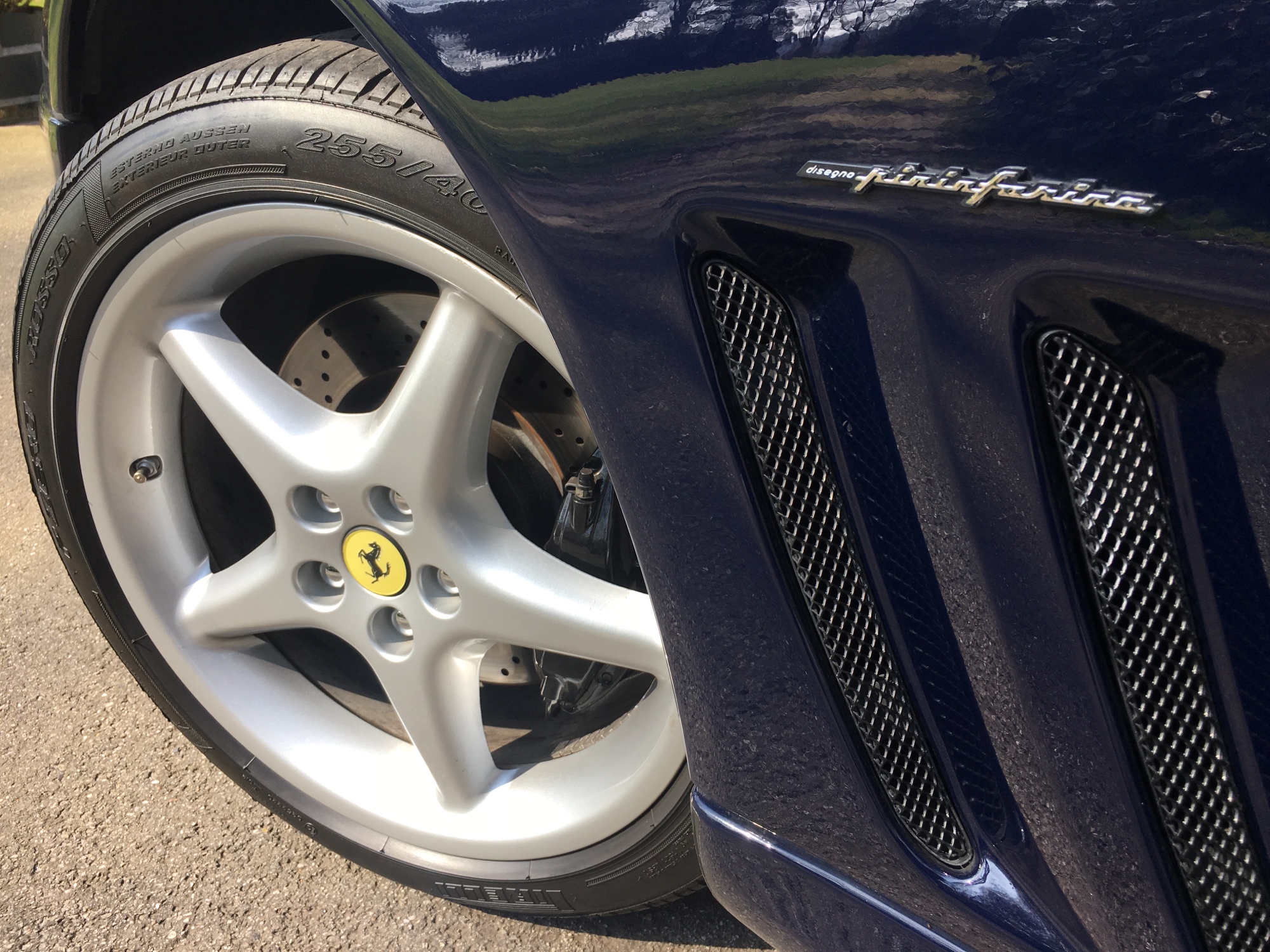
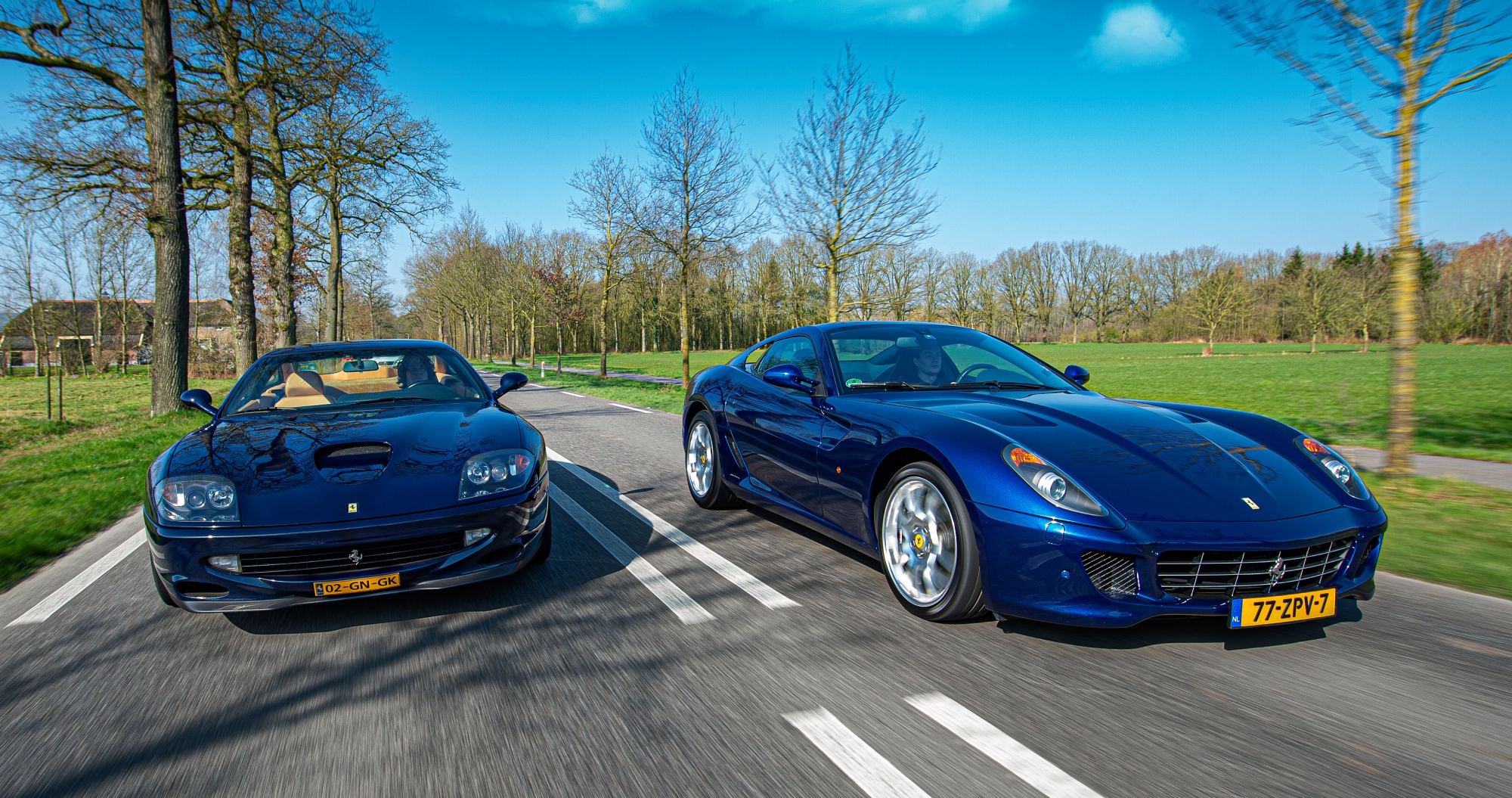
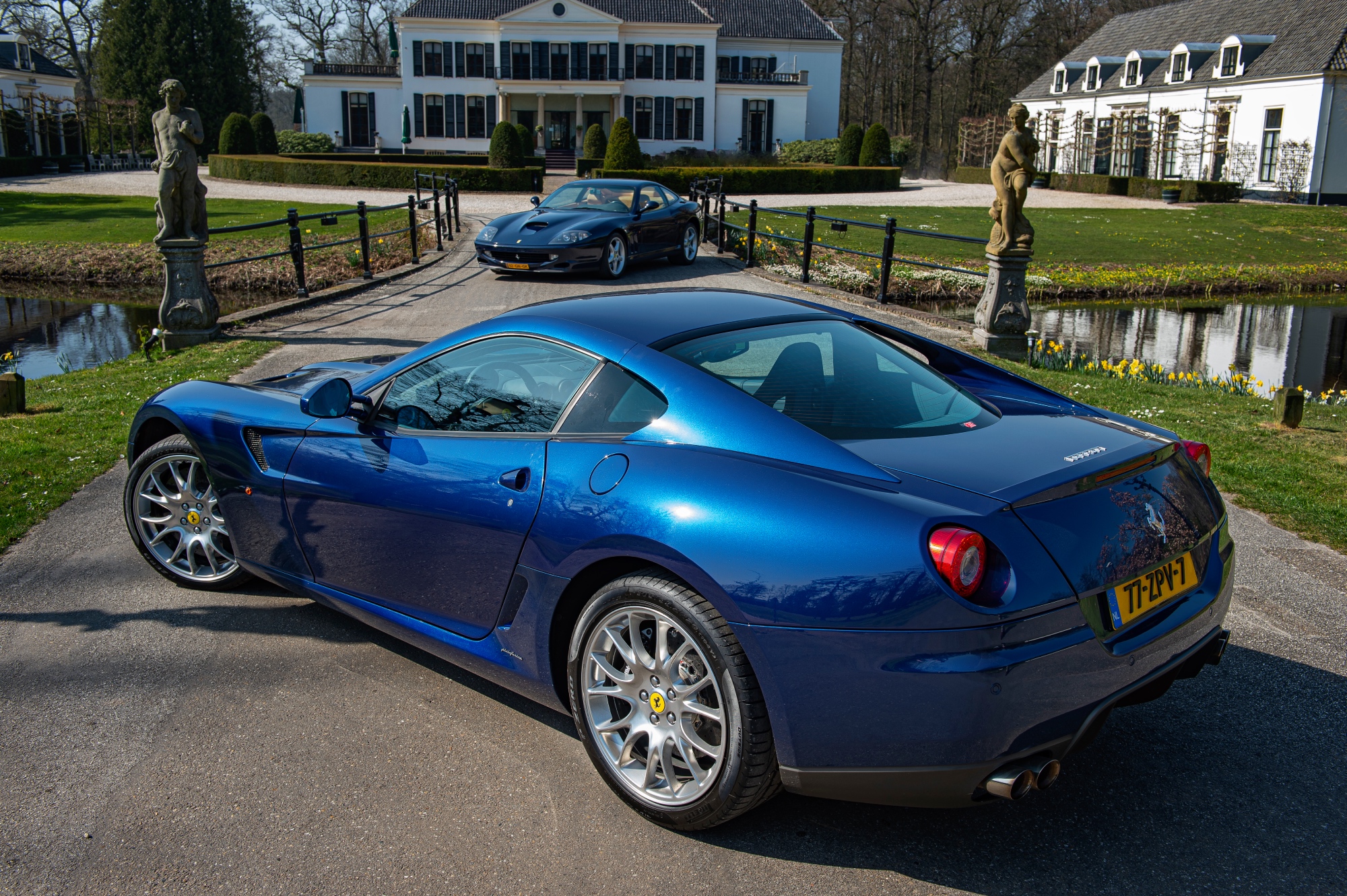
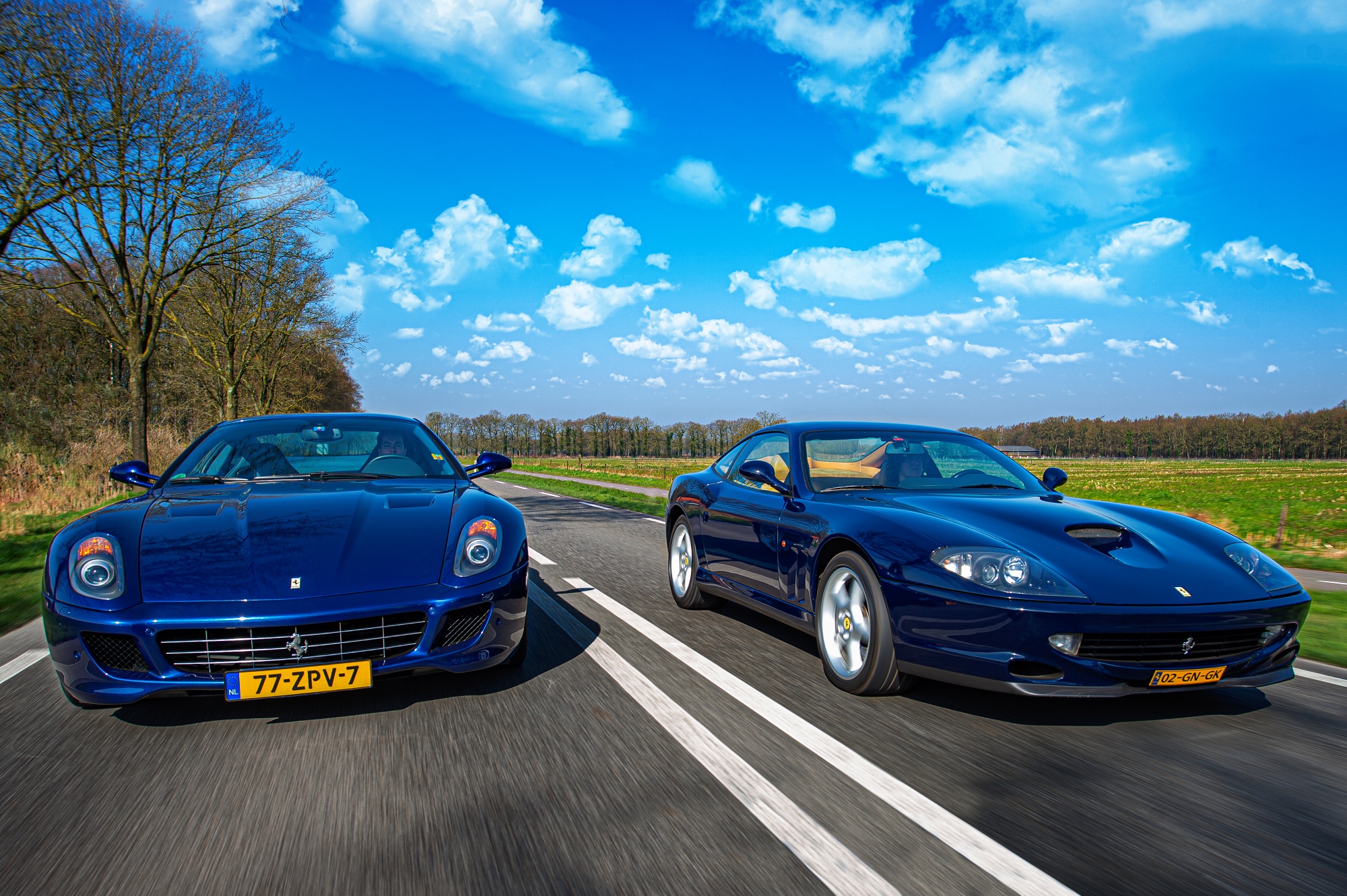
Ferrari’s open-gate manual gearbox disappeared some fifteen years ago, but it was never forgotten. Years of pressure from owners, press and enthusiasts eventually resulted in Maranello developing an alternative, allowing traditionalists to row their own gears once again. It felt like the right moment to look back, so we’ve brought together a 550 Maranello and an exceptionally rare 599 GTB Fiorano: respectively, the last Ferrari V12 GT offered exclusively with a manual gearbox, and the last to offer a manual at all.
Nostalgia is a strange and often inexplicable phenomenon. This longing for the past can lead people to make irrational decisions, often rejecting every form of innovation without considering the real benefits. The ongoing lament among Ferrari enthusiasts over the disappearance of their beloved manual gearbox could be described in much the same way. Viewed purely rationally, however, Ferrari’s decision is easy to explain. The engineers in Maranello have always, or at least in the last few decades, been guided primarily by racing technology developed in-house, and the semi-automatic transmission was tangible proof of this when it debuted in the F355 F1 in the autumn of 1997. At the time, the leading industry newspaper Automotive News Europe predicted that more than 60 per cent of F355 buyers would opt for the new F1 gearbox in 1998, and that it might eventually become the only transmission offered by Ferrari.
When the 550 Maranello was upgraded to the 575M, it was the first V12 GT to receive the F1 transmission, followed by the 612 Scaglietti, which completed Ferrari’s ‘robotisation’ of the entire line-up. The sales figures showed that buyers clearly favoured the innovative Formula 1 technology, and manual gearboxes were largely ignored. When the 599 succeeded the 575M in 2006, Ferrari still offered a manual, as they did on the F430, but it was available by special order only. It is a common misconception that they produced only 30 examples of the manual 599, but the records of Ferrari data analysts Maranello Data contain 61 chassis numbers for 599 GTBs that left the factory with a gated shifter. With a total production of roughly 3,500 cars, this explains why the manuals are worth an order of magnitude more than the F1-equipped cars nowadays.
Some argue that Ferrari had already given up on the manual at that point, supposedly explaining why the manual 599 GTB Fiorano was poorly developed and consequently unpleasant to drive. According to this theory, the F140 V12, which debuted in the Enzo, was developed with only the F1A transmission in mind, with a manual gearbox being a mere afterthought. This is a surprising theory, since the two gearboxes are virtually identical in terms of hardware; only the clutch and gearshift mechanisms are electro-hydraulically operated in the F1 version. If the manual car really is unpleasant to drive, the reason must therefore lie, or rather sit, behind the steering wheel… To find out whether that is true and whether this makes the 550 Maranello the last of the true manuals, we brought the two cars together.
Sportscar
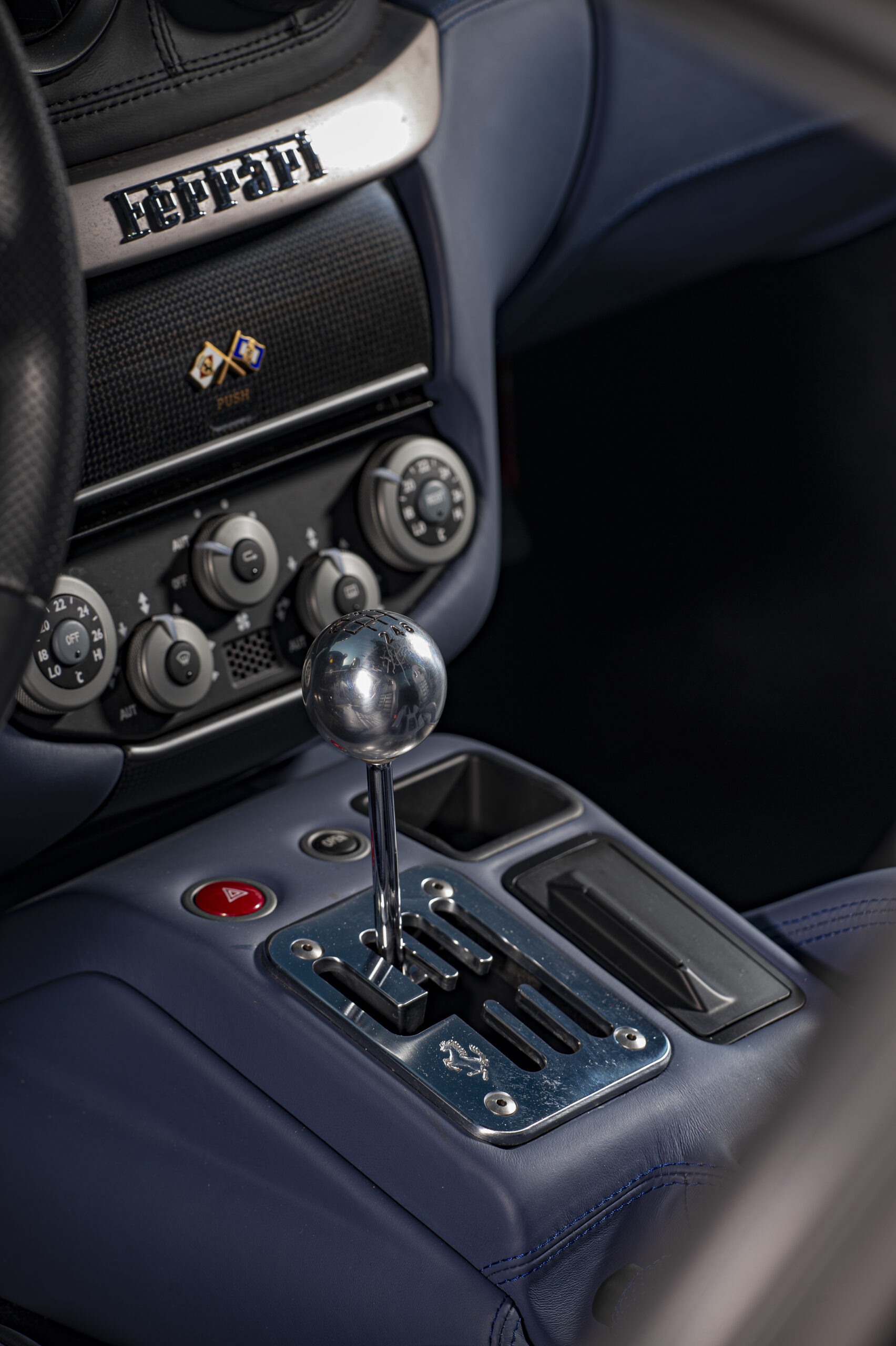
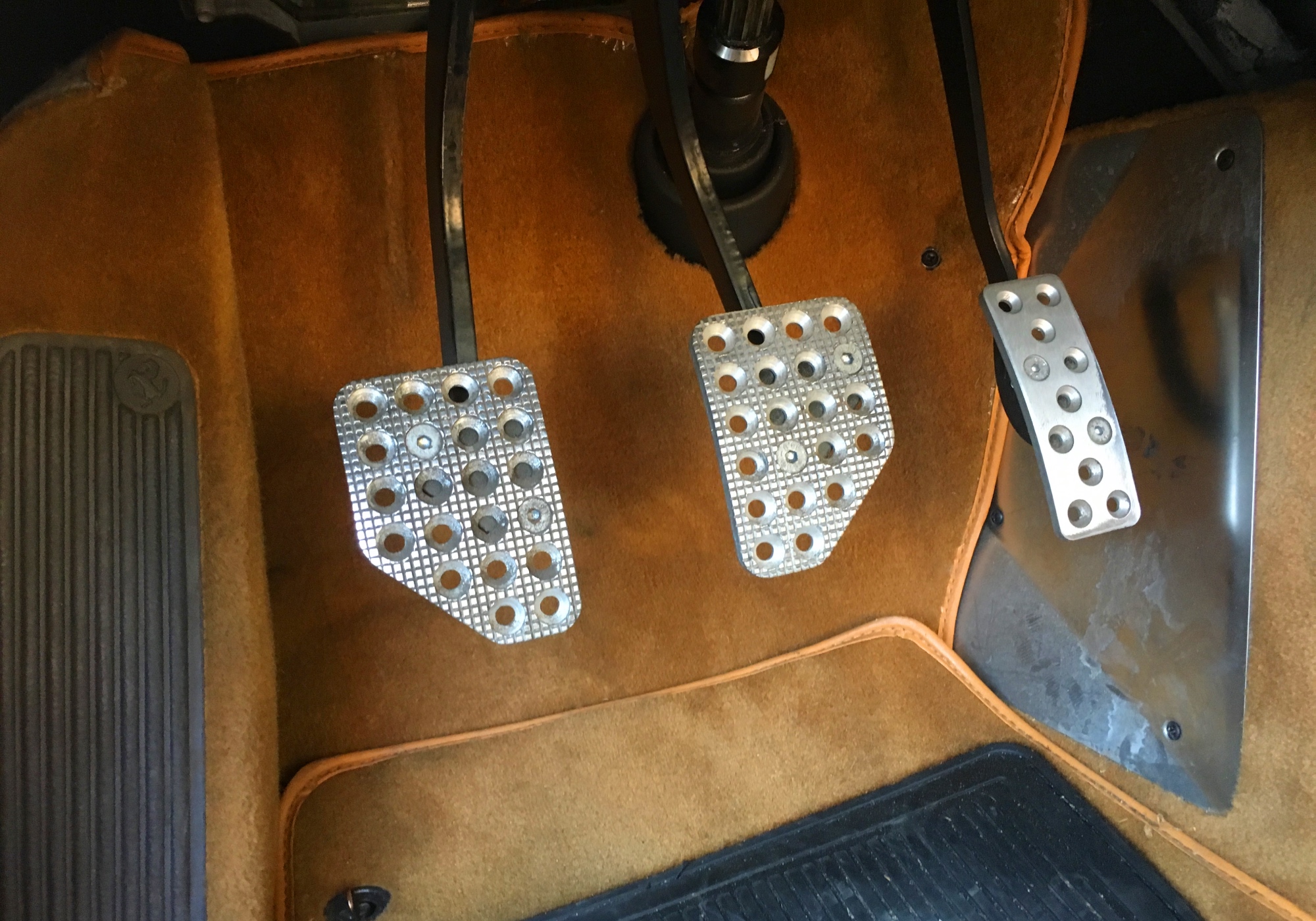
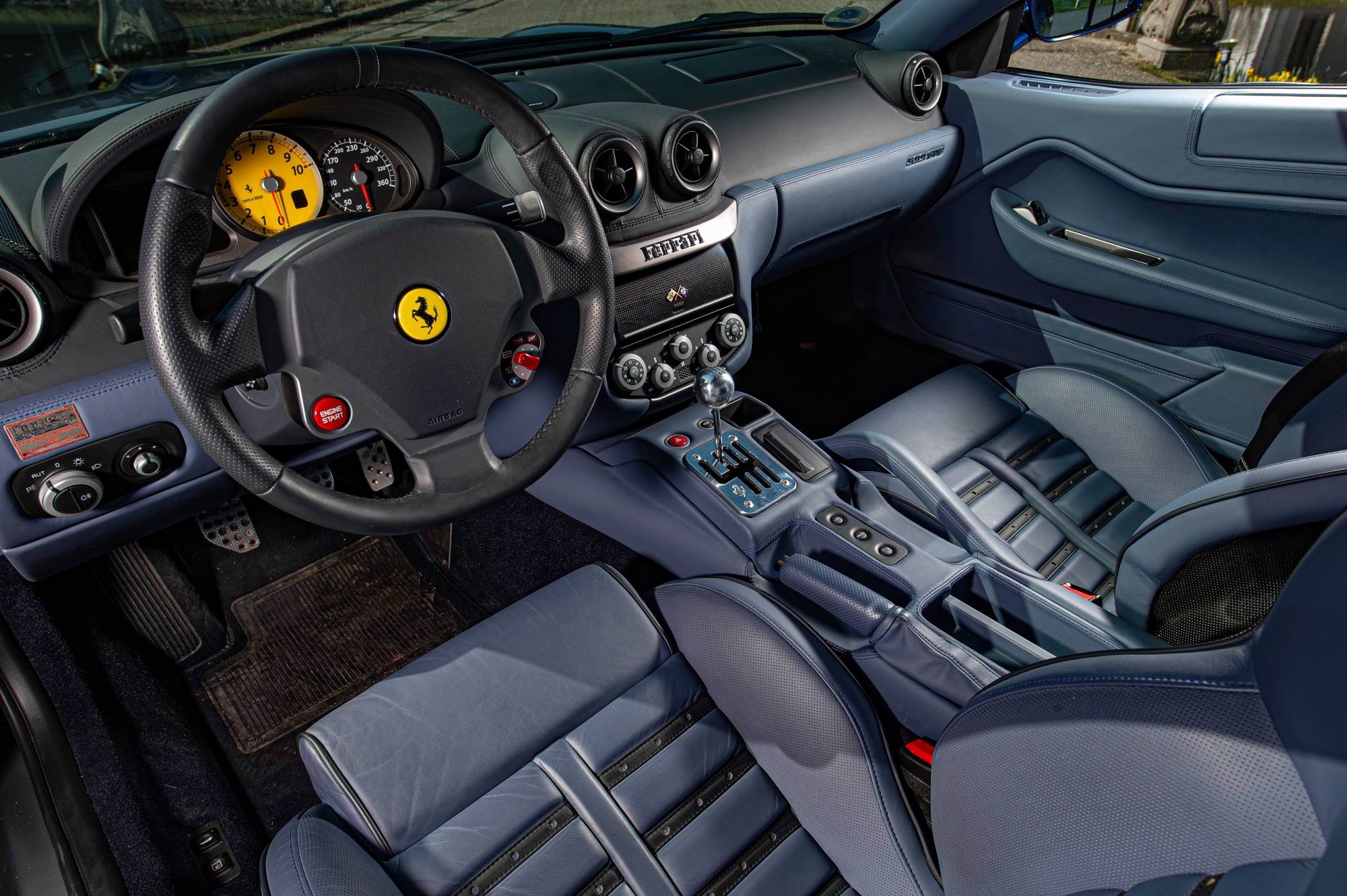
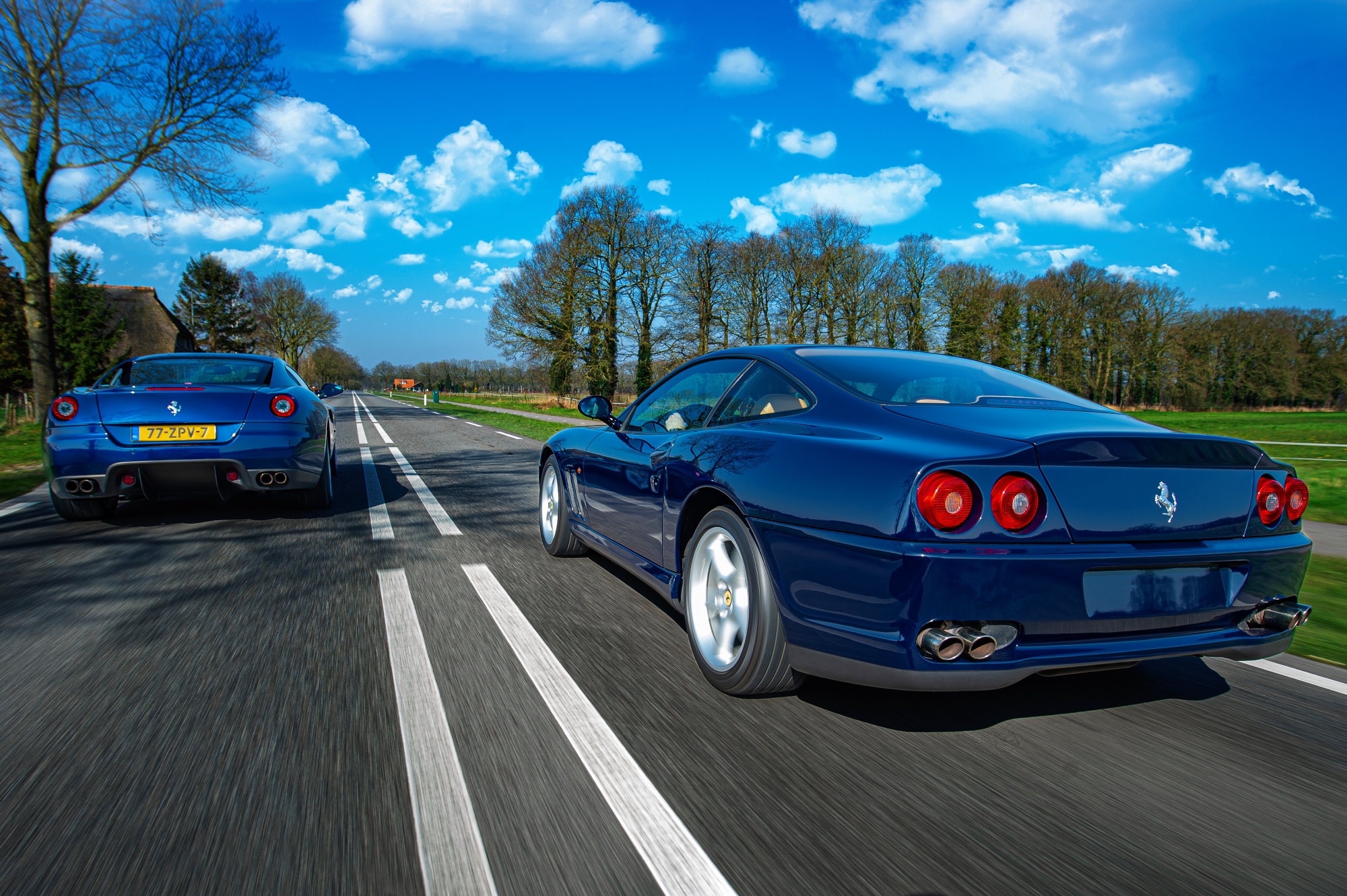
Setting off in the 599 is no different from any other manual Ferrari of the same era. Gently releasing the clutch in any V12-powered car is generally enough to get it rolling, thanks to the abundant low-end torque. The clutch pedal is relatively light, and the biting point is easy to judge precisely. When shifting from first to second, there is a slight resistance as you pull the lever out of first gear, but apply a little more force and it springs into neutral. Selecting second also requires some effort. With the oil still cold, this is not surprising, but it does require some attention, which brings another factor of this drivetrain into play. Because of the lightweight flywheel, the revs drop to idle as soon as you press the clutch, so when you release the left pedal again, you must pay close attention to how far you press the accelerator, as the revs flare up quickly. This sounds remarkably like the advice a driving instructor might give during a first lesson, but this drivetrain requires more attention that average to drive smoothly. Get it right though, and the reward is infinitely greater than in a 599 with the F1 transmission. Braking for a corner and downshifting while blipping the throttle turn gearchanges into a perfectly synchronised mechanical dance accompanied by one of the best symphonies available in a road-legal car.
Once the engine and gearbox have reached their proper operating temperatures, the beautiful metal gear lever still demands a firm, decisive hand. Shifts can be made quickly and cleanly though, and the 599 reveals itself as a sportscar in GT guise, seemingly always on the lookout for a rival to race. It does not have the almost manic character of, say, a 488 Pista, but it seems unwilling to miss any opportunity to pull all the way to 8,000 rpm. The cabin fills with a howl reminiscent of a 1970s Le Mans racer at the beginning of the Ligne Droite des Hunaudières. The temptation is, of course, irresistible, but the car’s extraordinary potential must be handled with restraint. Anyone who exploits such performance too recklessly risks not only serious penalties from the authorities, but also their own safety.
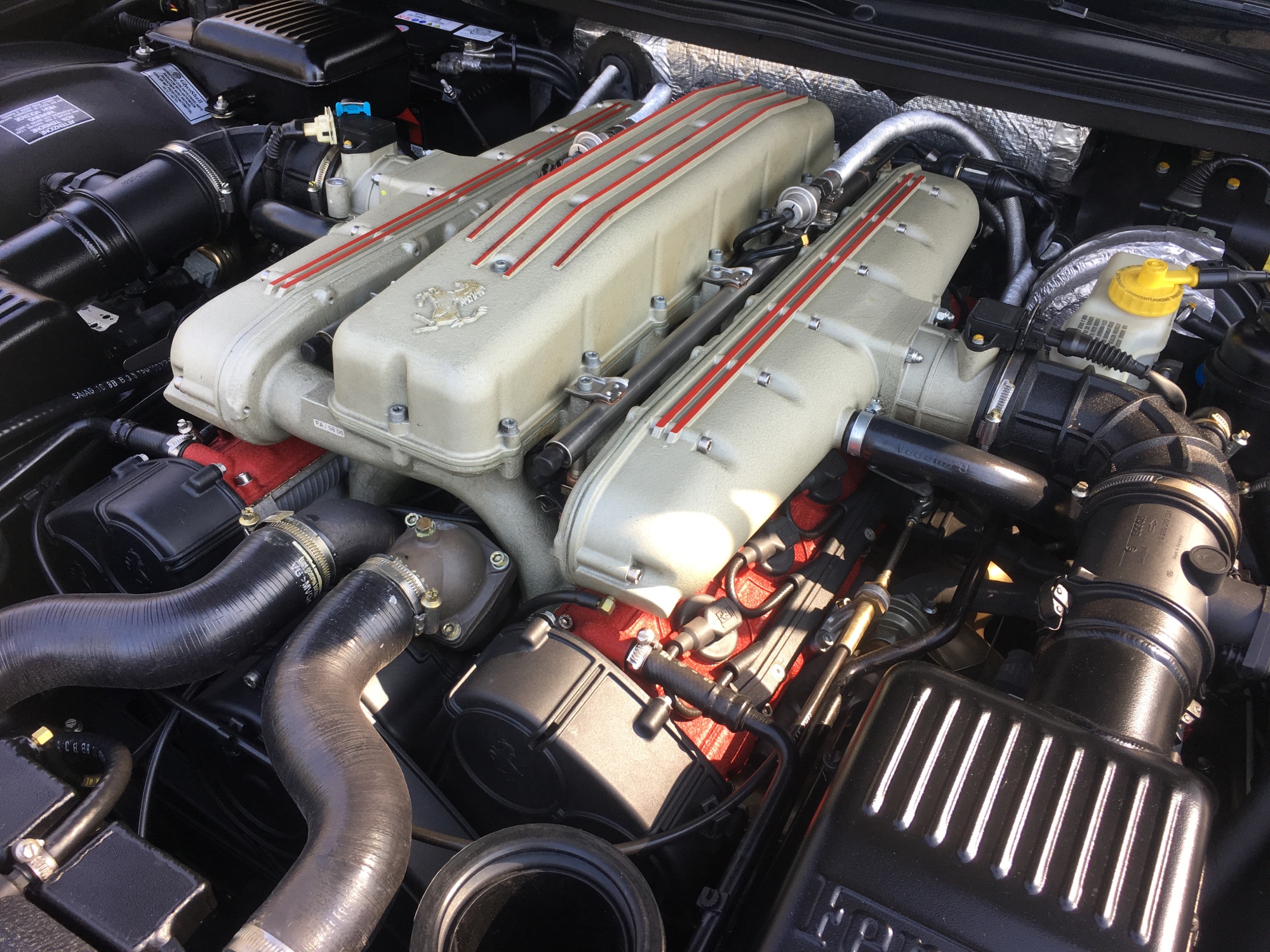
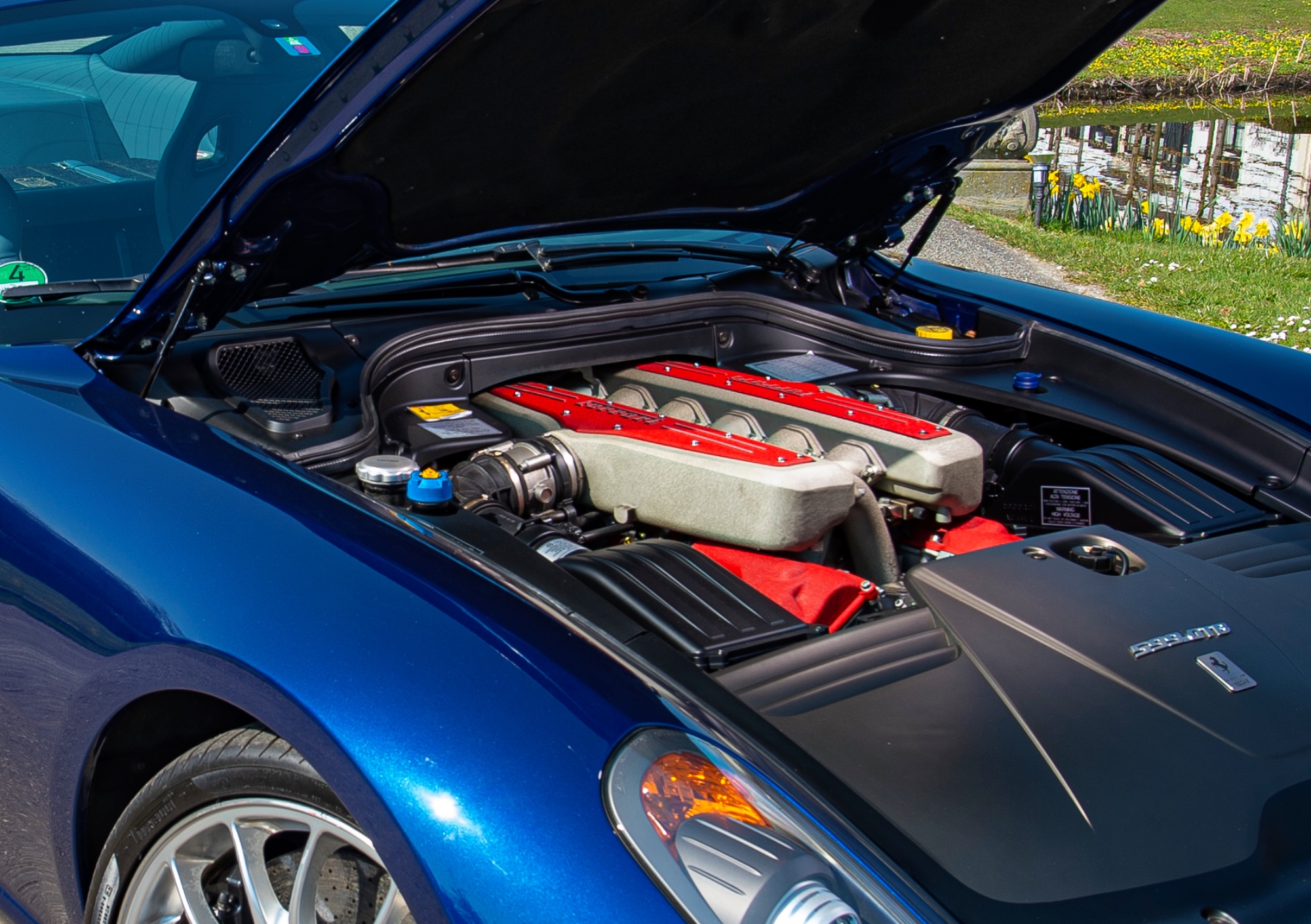
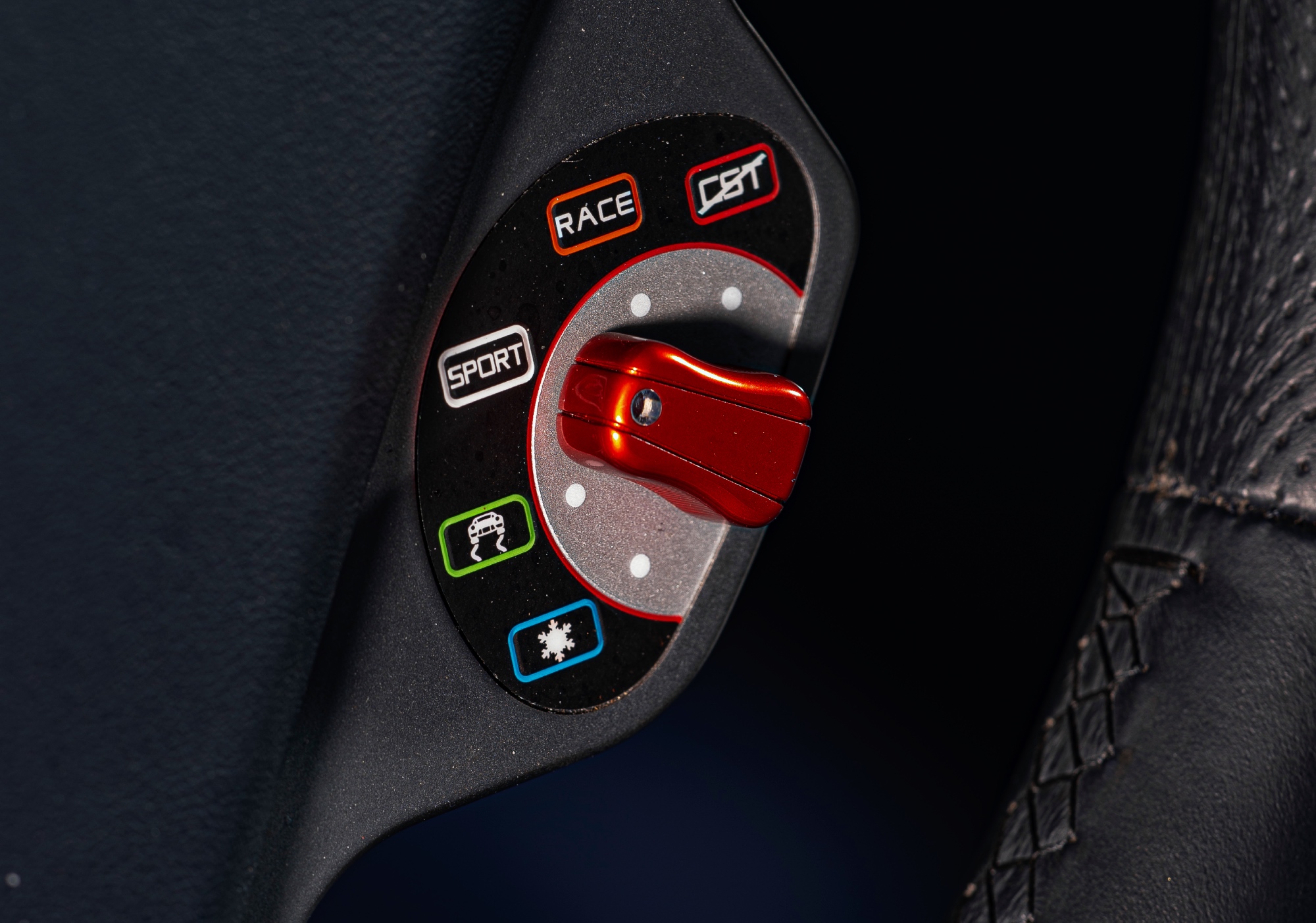
The 5,999cc V12 in the nose of the Fiorano produces almost the same amount of power as the 3.5-litre V12 in the Tipo 640 F1 car, in which the revolutionary electrohydraulically actuated semi-automatic gearbox first appeared in 1989. That is a good enough reason to be mindful of the manettino on the steering wheel. The first two settings are for winter conditions and wet weather, so the middle setting – Sport – is a nice starting point, as it offers the best balance between high-performance road handling, the active suspension and electronic safety features. The Corsa (Race) mode is for track use or very spirited driving. Since it cannot alter the gear changes as it does in the F1-equipped cars, it only firms up the suspension and offers a more responsive throttle mapping, while significantly reducing electronic stability interventions. In the final setting, you are on your own, so you had better bring all your driving talent, because the car is not going to help you in any way.
Besides the joy of operating a manual transmission and the characteristic sound of the lever sliding through its metal gate, the driving experience is the same as in a 599 GTB F1. In almost every respect, the 599 feels like a modern Ferrari. The steering is light and exceptionally direct, the ceramic brakes deliver formidable stopping power that is easy to modulate, and the throttle response is typical of the F140-generation of engines. Compared with older V12 variants the F140 spins up with lightning speed and delivers its maximum power at 7,600 rpm. Even for the maximum torque of 608 Nm (448 lb-ft) the crankshaft needs to be spinning at 5,600 rpm. The connection between driver and engine feels almost telepathic. Everything is geared towards speed and performance, making the 599 a GT with a particularly sporty side that keeps urging the driver to wring out every gear to the redline at 8,400 rpm.
Traditional
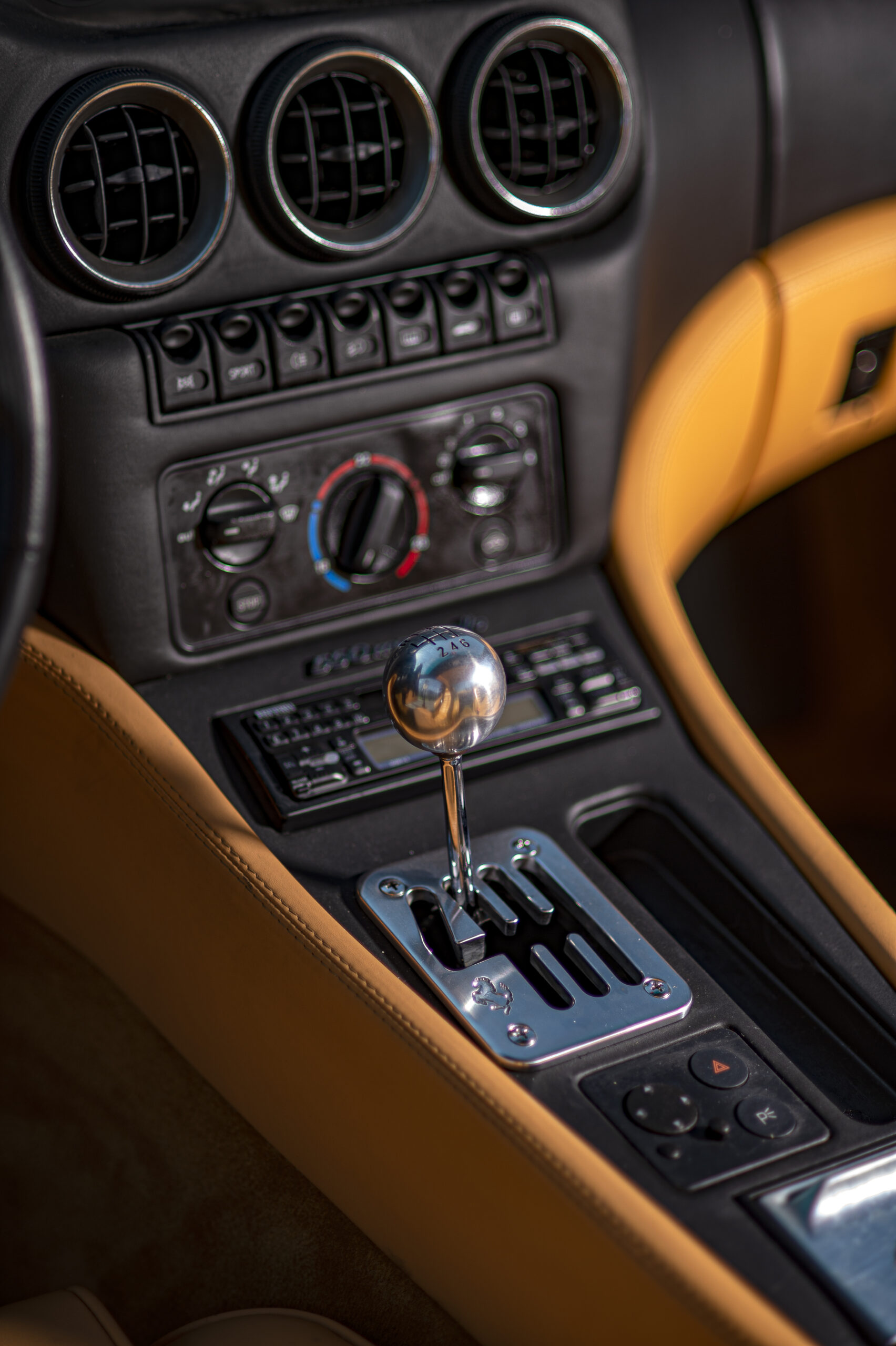
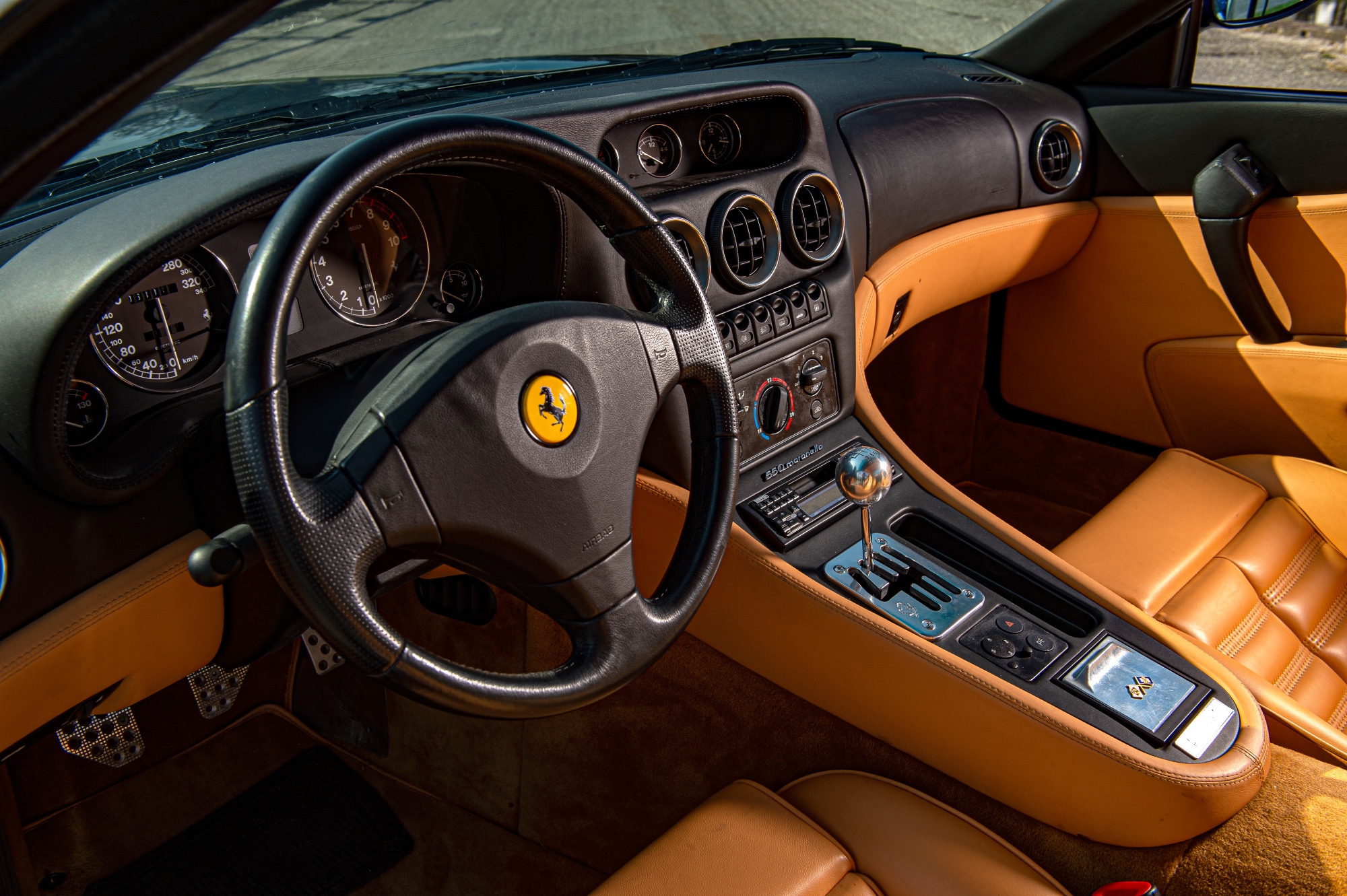
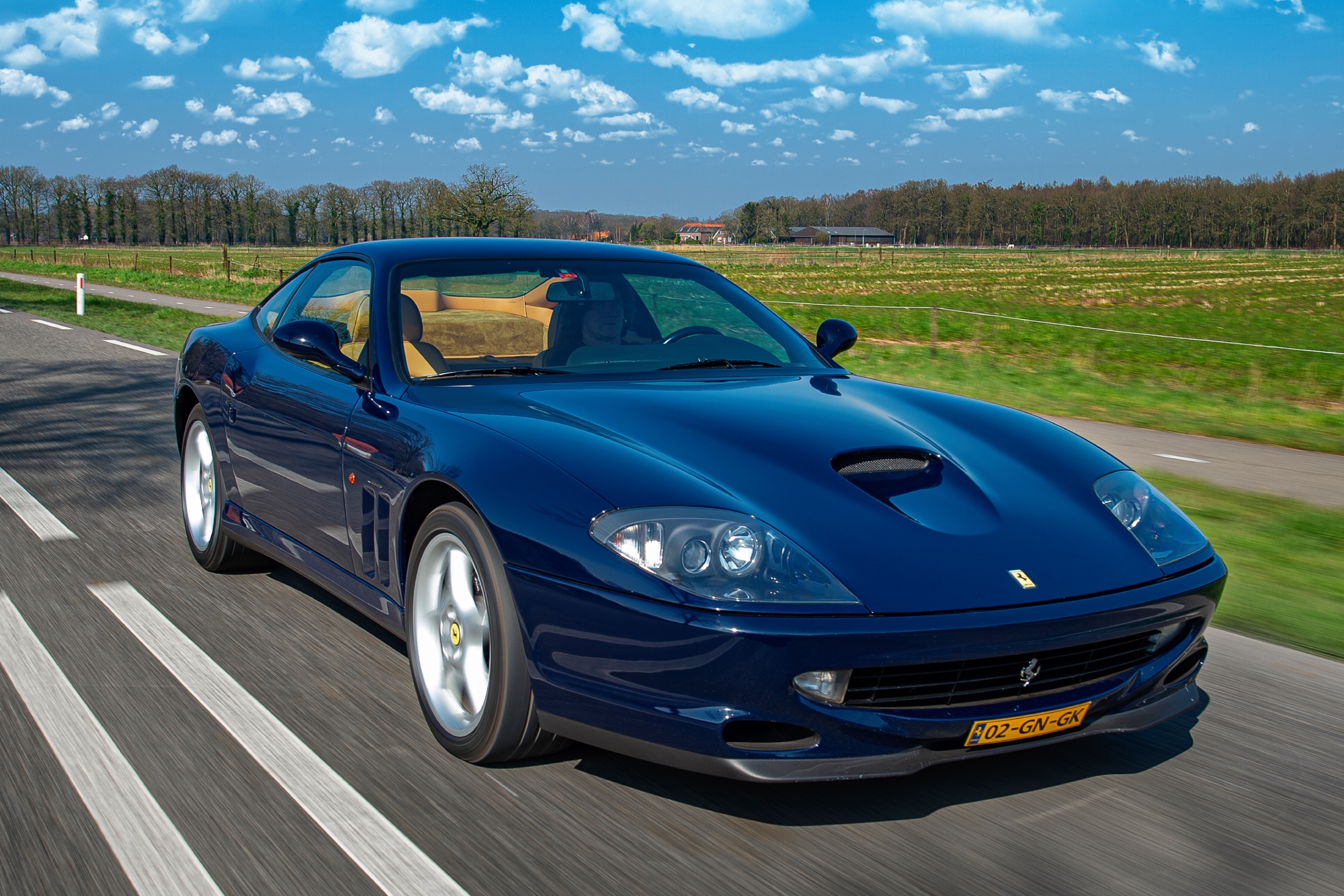
Compared with the 599, the 550 Maranello offers a distinctly old-school driving experience. Every control requires more effort than in the 599, but this is far from unpleasant and actually adds to the classic driving experience. Like the 599, the six-speed gearbox only reveals its characteristic smoothness once the entire drivetrain has warmed up properly. The gearbox is also integrated with the rear axle rather than attached to the engine. This improves weight distribution, but it means the engine, which warms up much more quickly, cannot transfer its heat to the transmission. As a result, the gearbox oil takes considerably longer to reach its operating temperature.
Shifting is easier, though, because the revs don’t drop as drastically between changes, making transitions between gears smoother and less dependent on almost surgical precision. This is one of the most noticeable differences between the 550 and the 599. At low speeds in a high gear, there is plenty of pulling power available. The 5.5-litre F133 V12 – carried over from the four-seater 456 GT without any major modifications – moves the Maranello along briskly and smoothly, but it does not have the racy character of the F140.
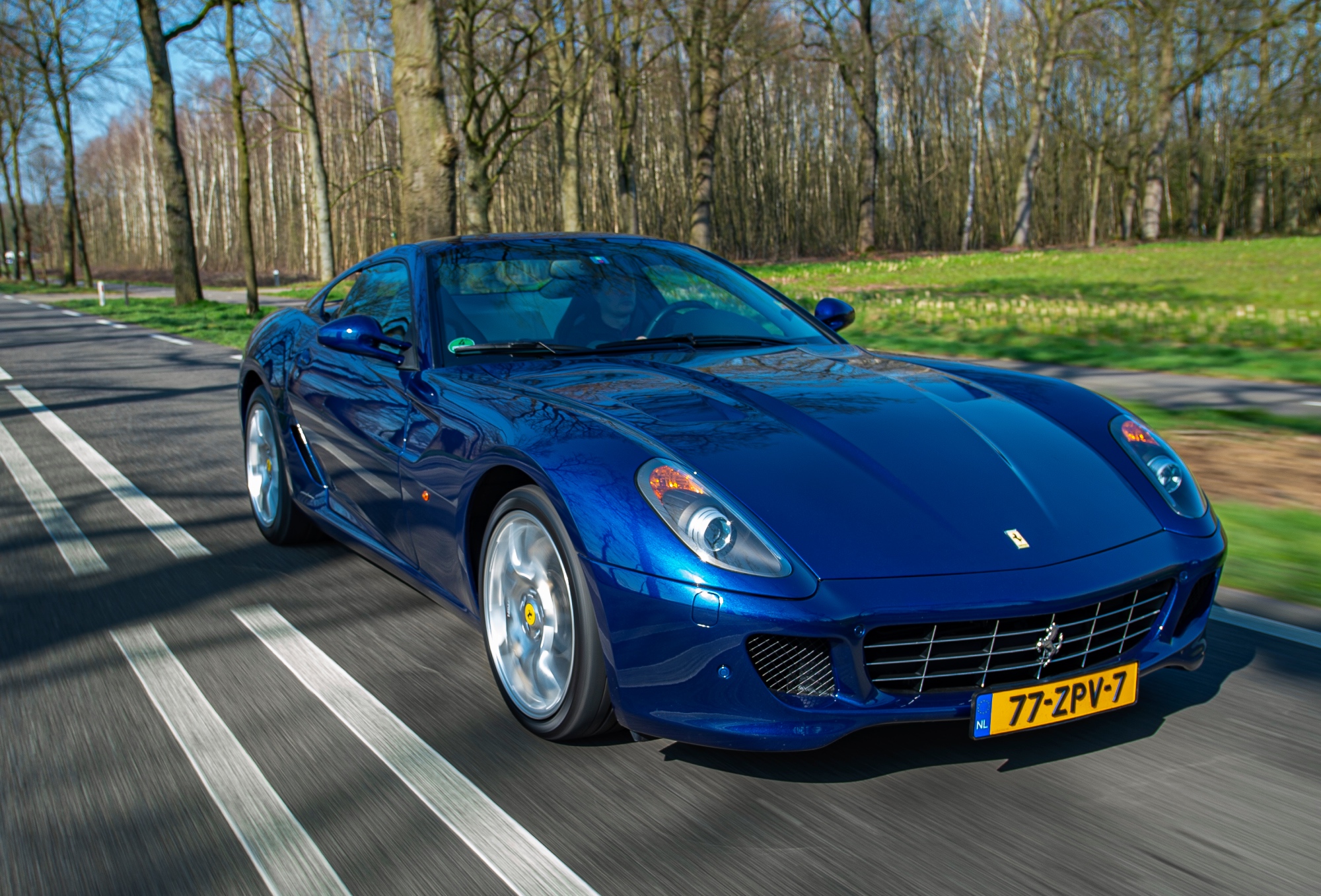
That does not mean the 550 has a restrained character. It simply takes a little more encouragement to bring its latent sporting ability to the surface. To get the most out of the Maranello, you need to keep the V12 high in the rev range and make full use of the gearbox. Push the car towards its limits on narrow, winding roads and you notice another important difference between the 550 and the 599, one that clearly marks a major turning point in Ferrari’s technological development. Whereas the 550 uses a traditional welded-steel frame closely related to that of the 456, the 599 has a newly developed aluminium spaceframe that is not only lighter, but also noticeably more rigid. This gives the suspension a more stable platform and results in superior body control that the 550 can’t match.
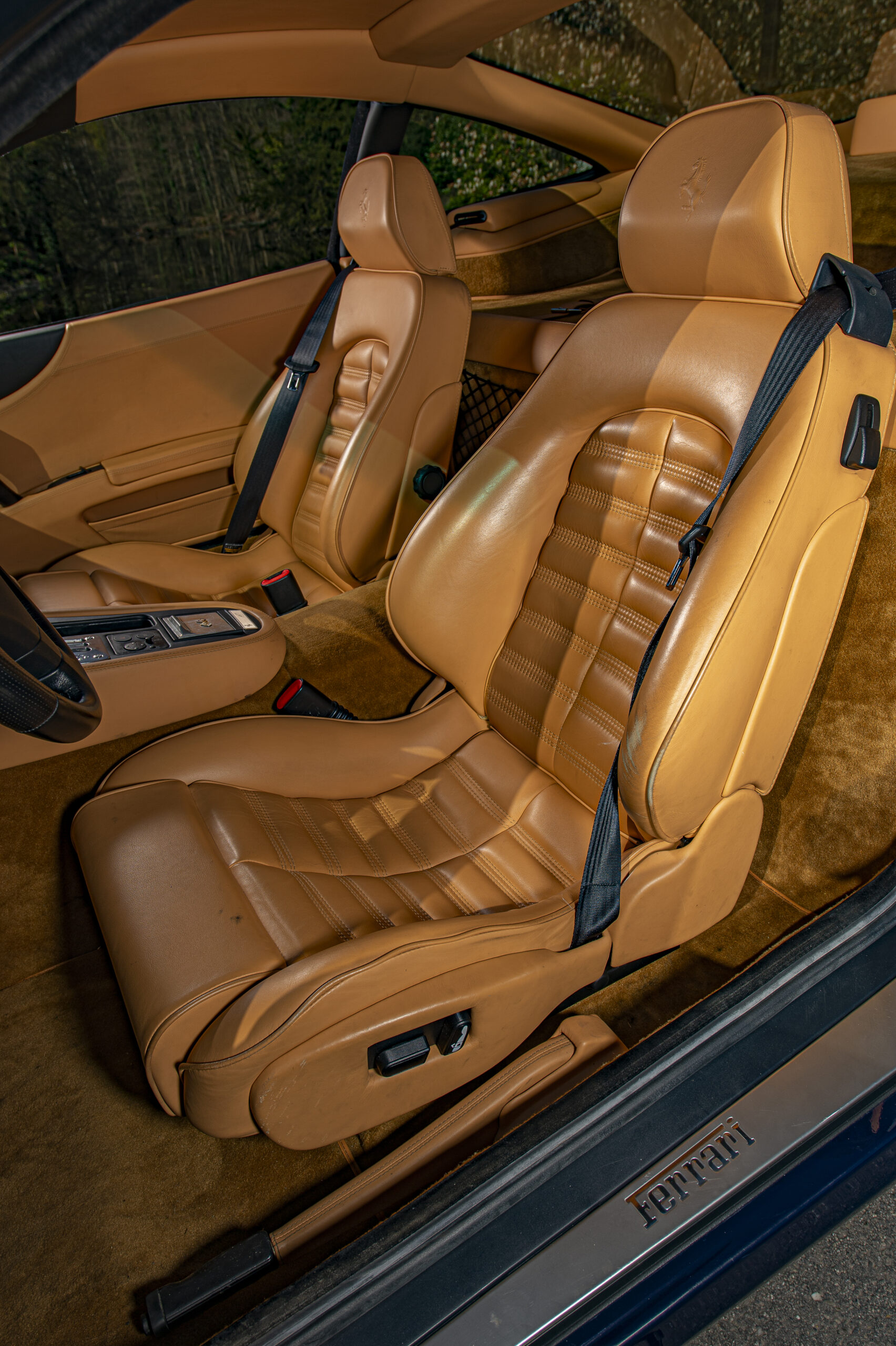
The best way to enjoy the 550 Maranello is to cover long distances at high speeds on motorways and open roads, which is exactly what Ferrari intended with this GT. With the 550 Maranello, Ferrari returned to the traditional front-engined GT in 1996, succeeding the iconic Berlinetta Boxer and Testarossa series and deliberately moving away from the mid-engined models with their exotic looks. Curiously, each successive model since the 550 Maranello and 599 GTB Fiorano became more powerful, sportier and faster, ultimately resulting in the extreme 812 Competizione, which is more a track-focused supercar than a usable GT.
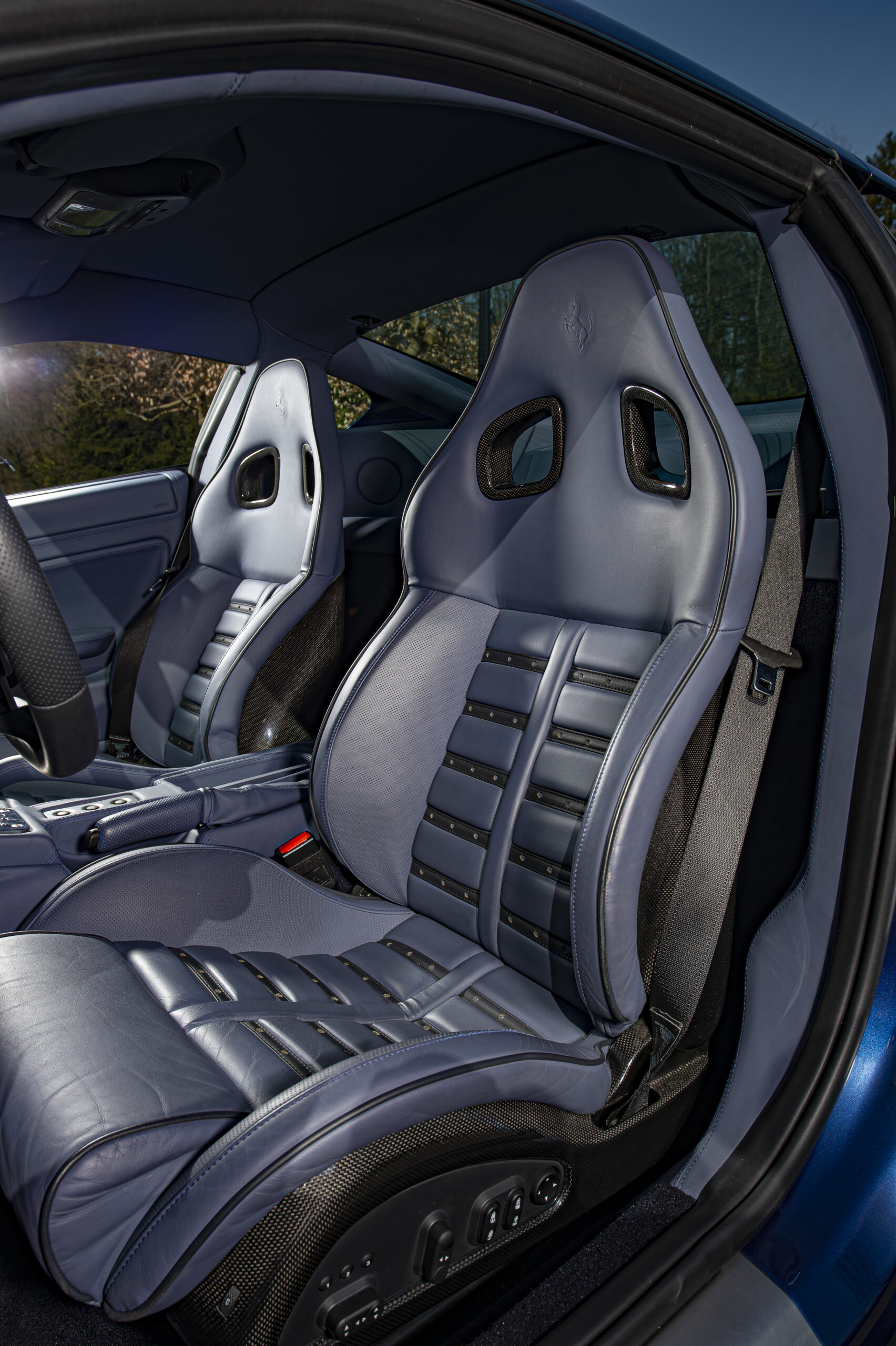
Since the arrival of the 206 Dino in 1967, Ferrari has maintained a clear distinction between its smaller, sporting mid-engined two-seaters and its flagship V12 GT and 2+2 models, aimed at a different, more restrained clientele. The 550 is clearly a descendant of that traditional philosophy. With a total production of around 3,100 examples it will never be a candidate to stir up auction results or steal the show at a concours, but it holds a special place in the history of Ferrari as the turning point where the brand reconnected with its past and restored the role of the traditional gran turismo. The manual 599 GTB is a very different proposition. It has all the ingredients, except the F1 gearbox, of a modern-day Ferrari, and with 61 examples produced, it was a collector’s car from the outset.
Better?
That the undying love of a small group of dedicated Ferrari enthusiasts for the manual gearbox has changed the minds of the product planners in Maranello is demonstrated by the 12Cilindri Manuale. Porsche once took a similar path with the GT3 but quickly reversed course with models such as the 911 R and, later, the GT3 Touring. This proves that driving pleasure is rarely measured in acceleration figures or lap times. A traditional GT with a manual gearbox connected to a powerful V12 is one of the most enjoyable driving experiences, and the 550 Maranello and 599 GTB are two very different manifestations of this. The 61 manual 599s therefore serve as a wonderful reminder of the era before the widespread adoption of F1 transmissions – technology that is better in every respect, but not necessarily more entertaining.
- Smooth V12
- Classic grand tourer
- Aged beautifully
- Chassis flex
- Sticky buttons
Compared to later generations, the 550 Maranello is a Berlinetta of the classic era, with a welded steel frame and a torque-rich V12. This makes it a traditional grand tourer that leans toward intercontinental traveling, instead of maximising performance.
- F140 V12
- The last manual
- Very rare
- Tricky gear shifts
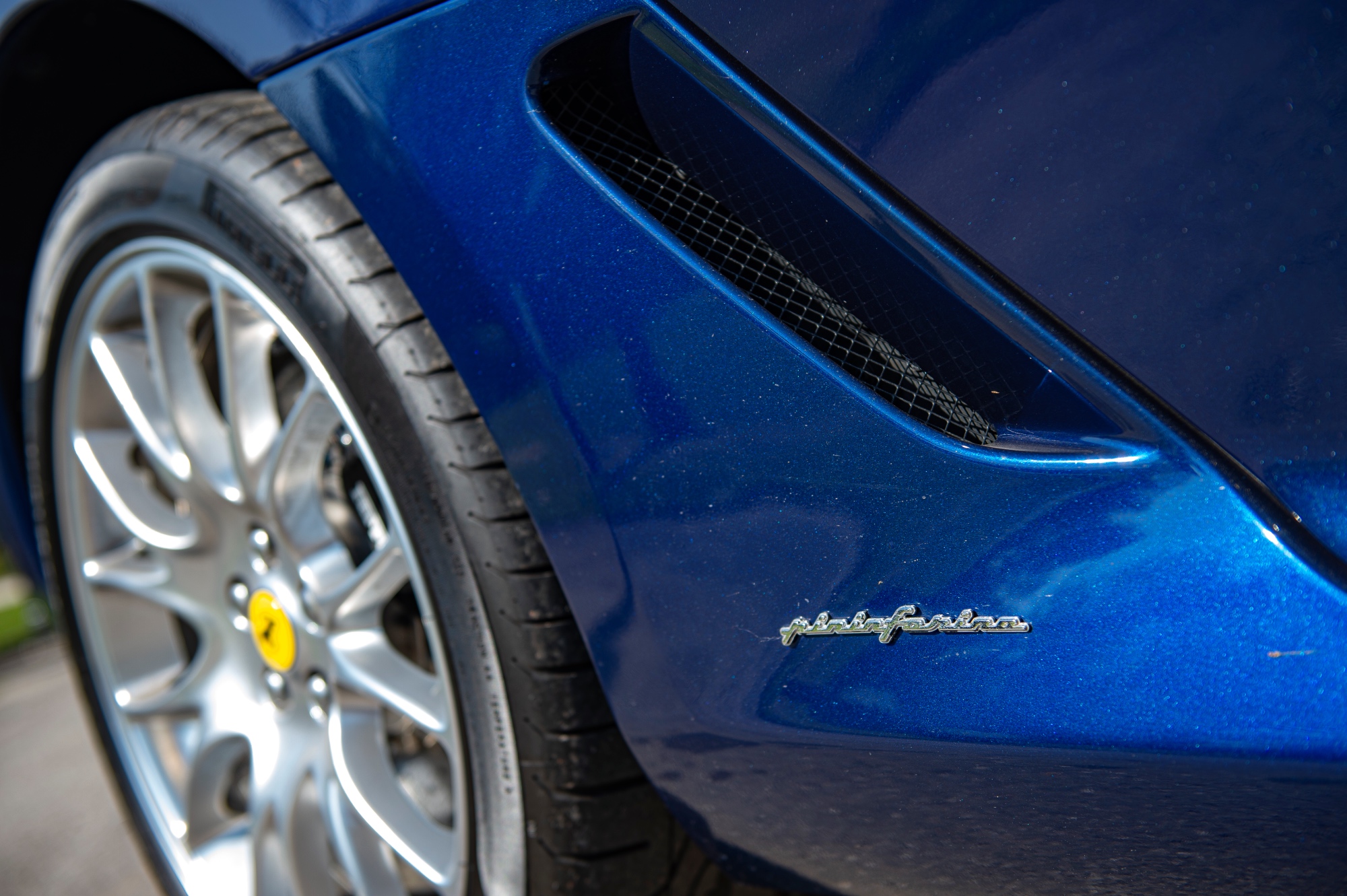
With about sixty cars made, the manual 599 GTB is one of the rarest modern Ferraris. This also makes it orders of magnitude more expensive than F1-equipped cars. The combination of the eager-to-rev F140 V12, a light flywheel and the manual 6-speed with an aggressive clutch make it challenging, but very rewarding to drive.
Support Motorcar Journal
Donate a tank of fuel