
Millennial misfits
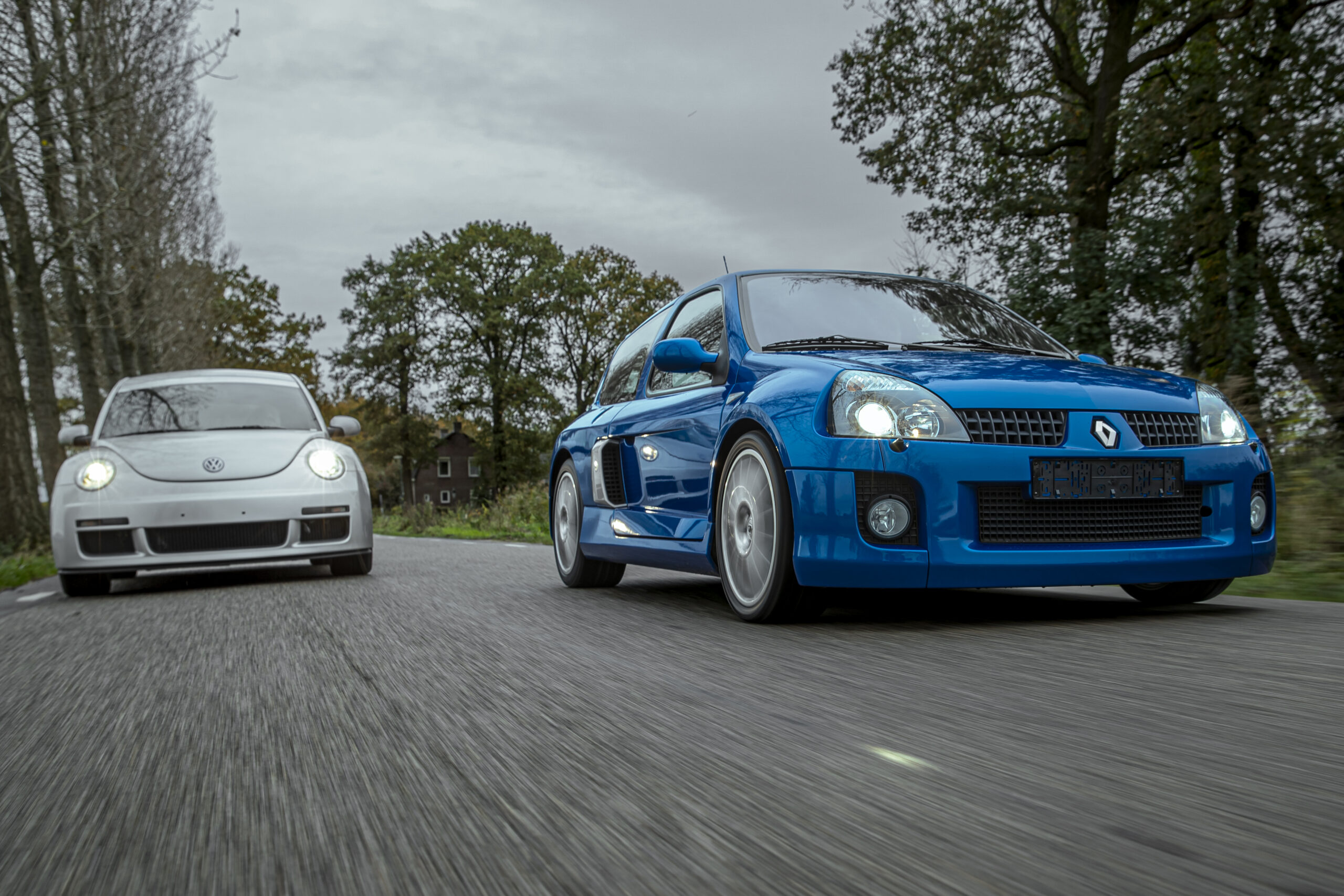
The Renault Clio V6 earned a reputation as one of the wildest hot hatches ever built, combining Renault’s proven recipe of race-bred engineering with a notoriously unforgiving character. Volkswagen wanted a slice of the action and shoehorned a VR6 engine into its New Beetle. The resulting Beetle RSi was every bit as eccentric, and it too traced its roots to the racetrack. Twenty-five years on, we bring these mad millennials together to discover which proved the more successful concept and whether they still live up to their legend.
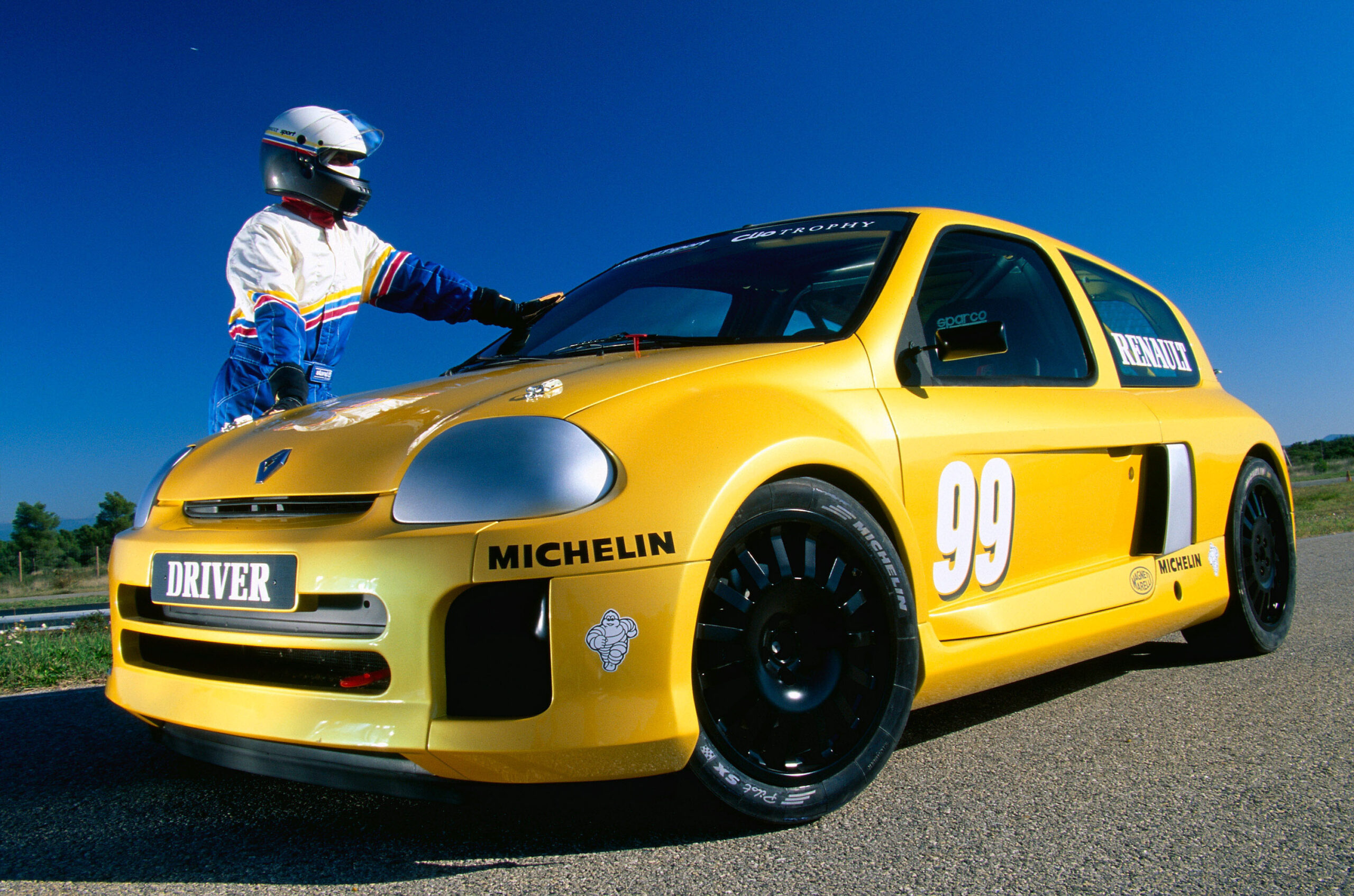
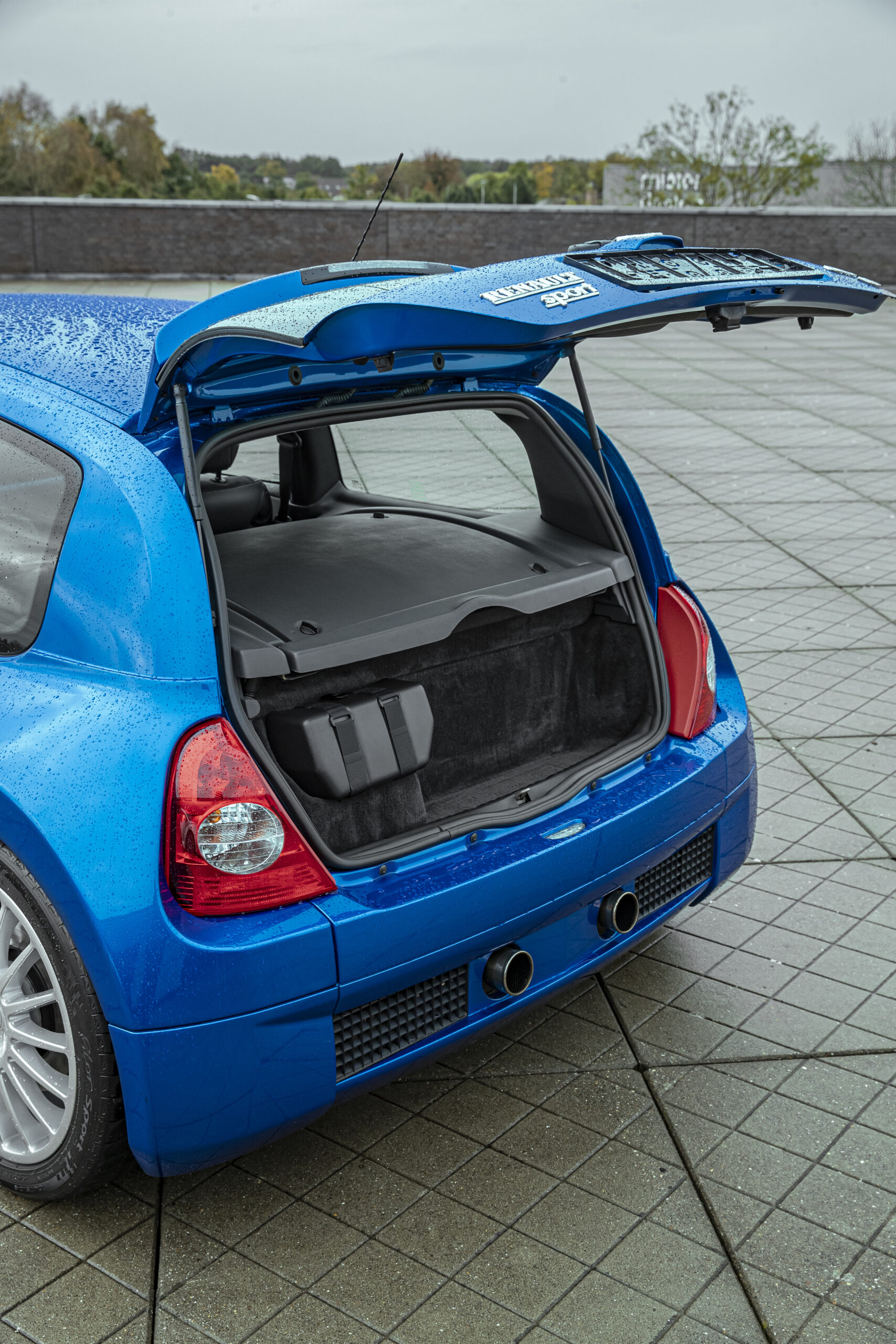
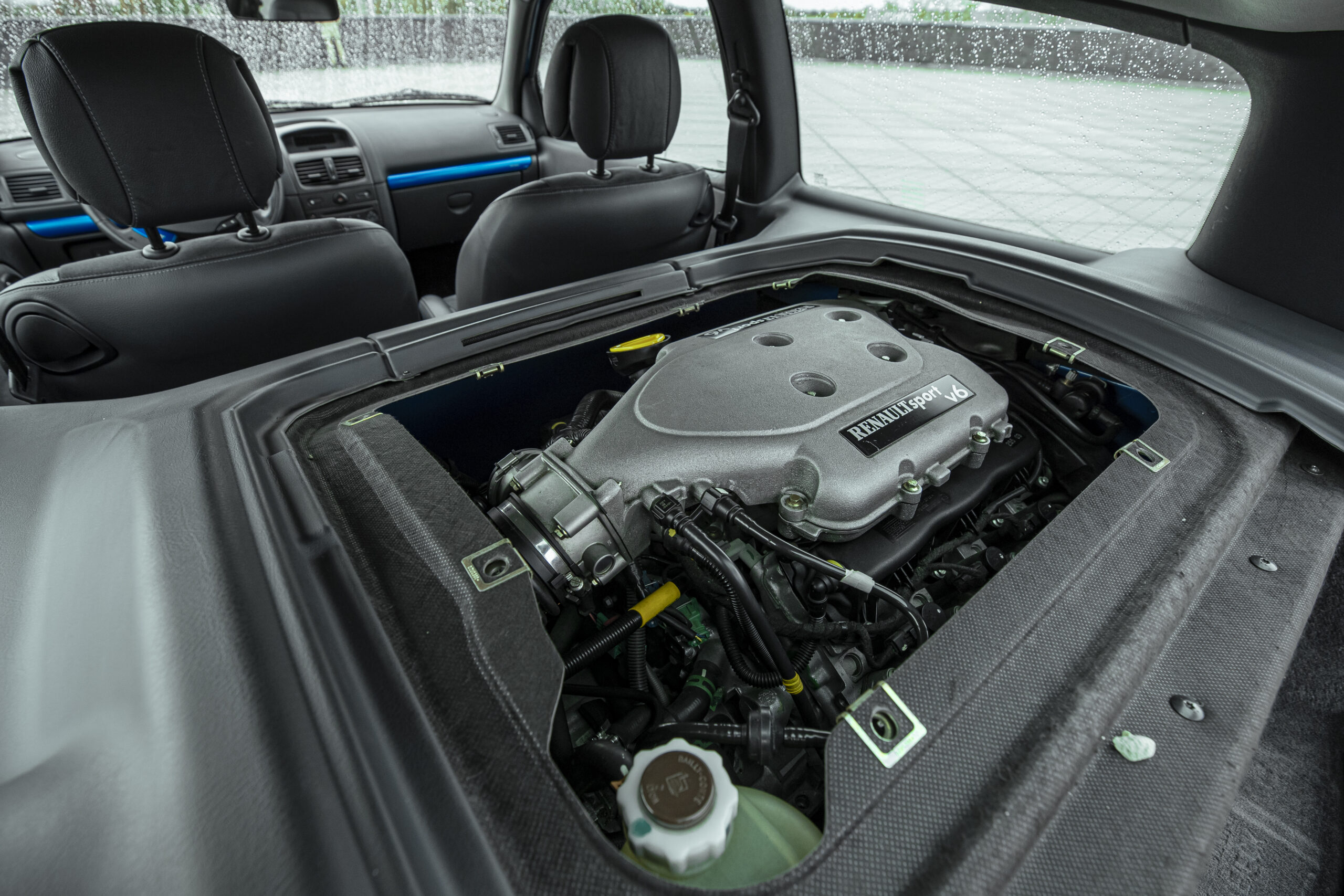
In a world obsessed with the Y2K bug, very few people paid attention to CO2 and downsizing. In the late 1990s, a compact hatchback with an over-sized engine was still guaranteed to draw media attention and large crowds at motor shows, as Renault demonstrated when it unveiled the Clio V6 Concept under the Renault Sport banner at the 1998 Paris Motor Show. Inspired by the successful Renault 5 Turbo Group 4 and Group B rally cars, it followed the same recipe by placing the engine behind the front seats and sending power to the rear wheels.
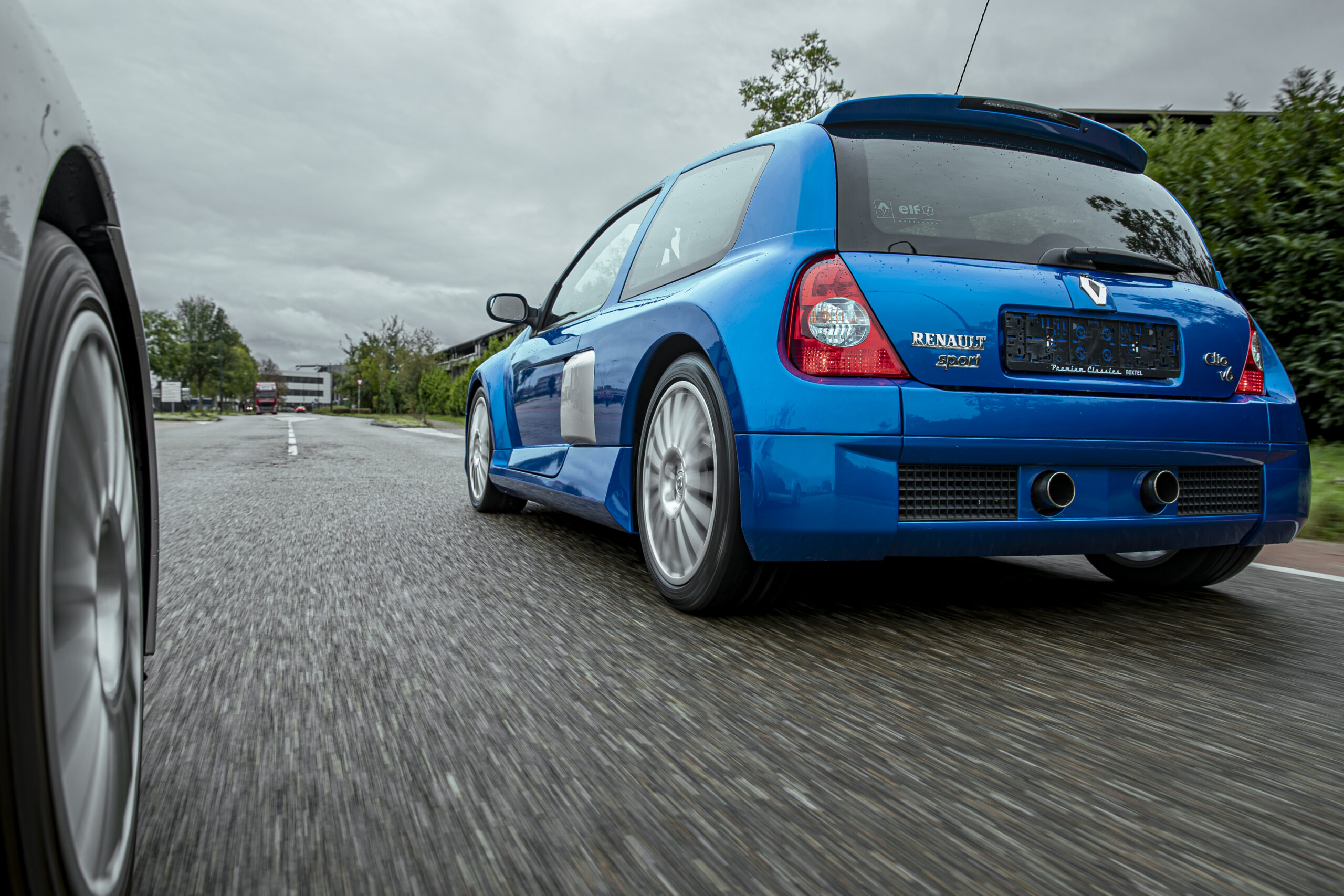
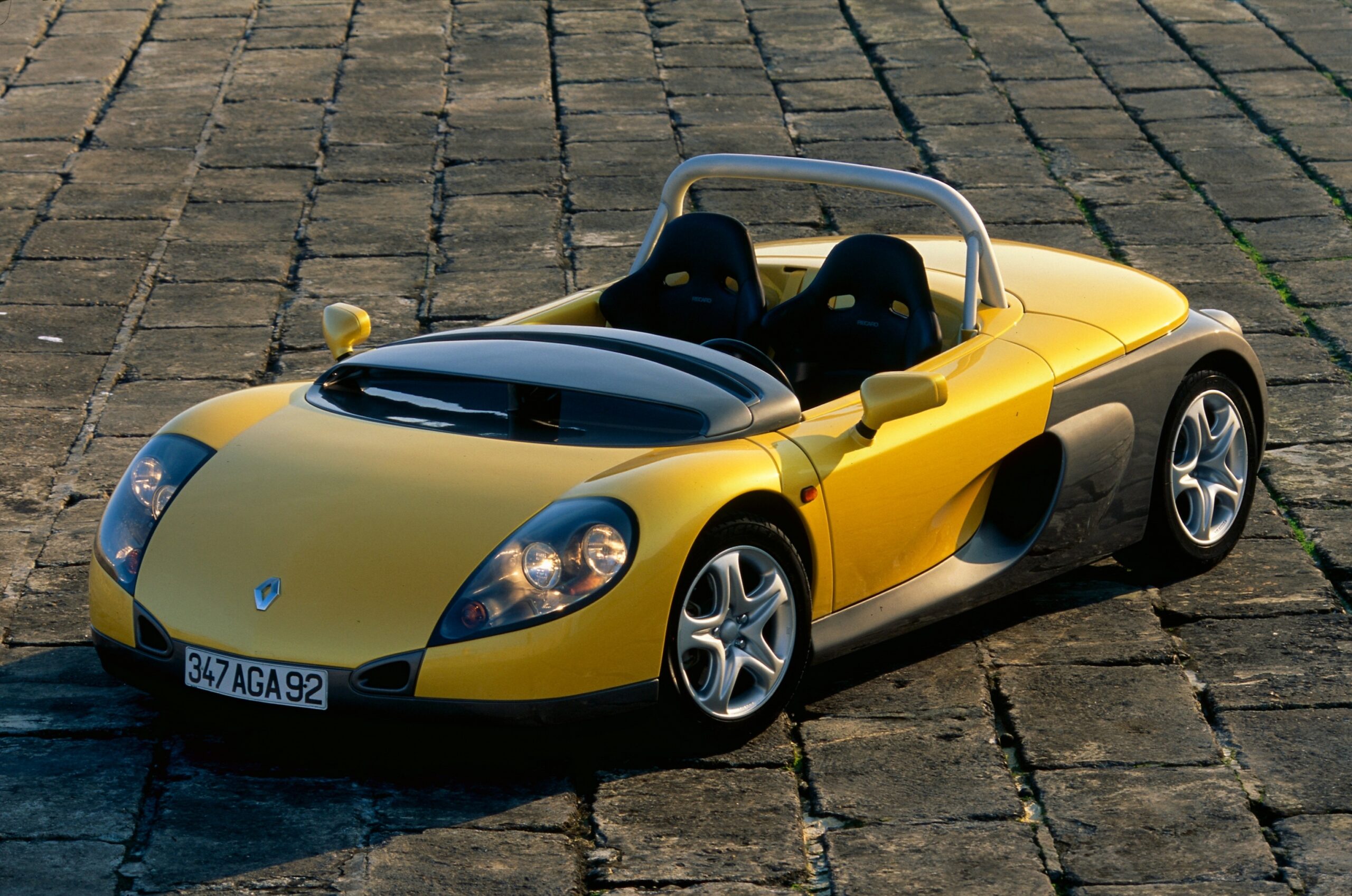
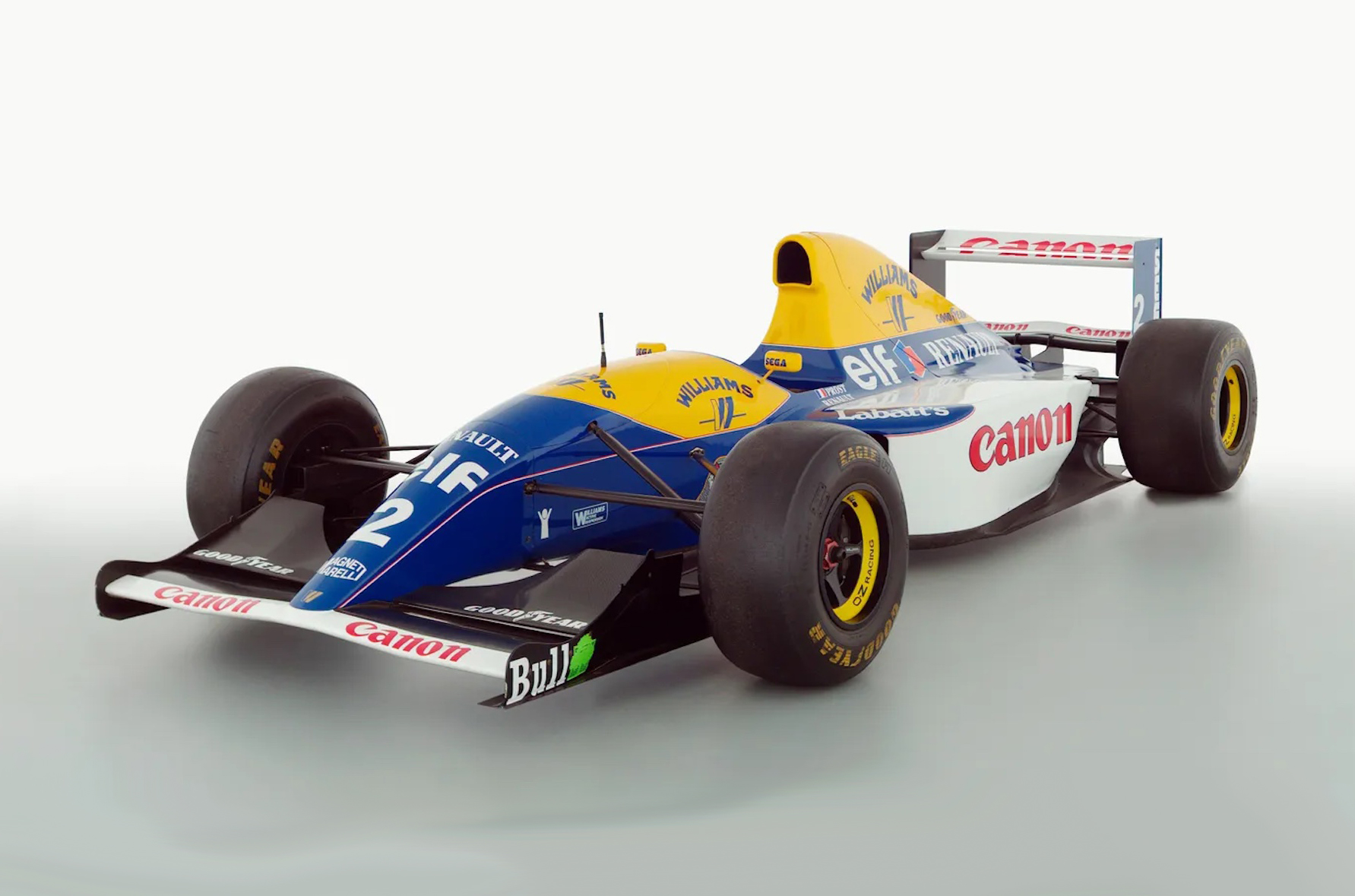
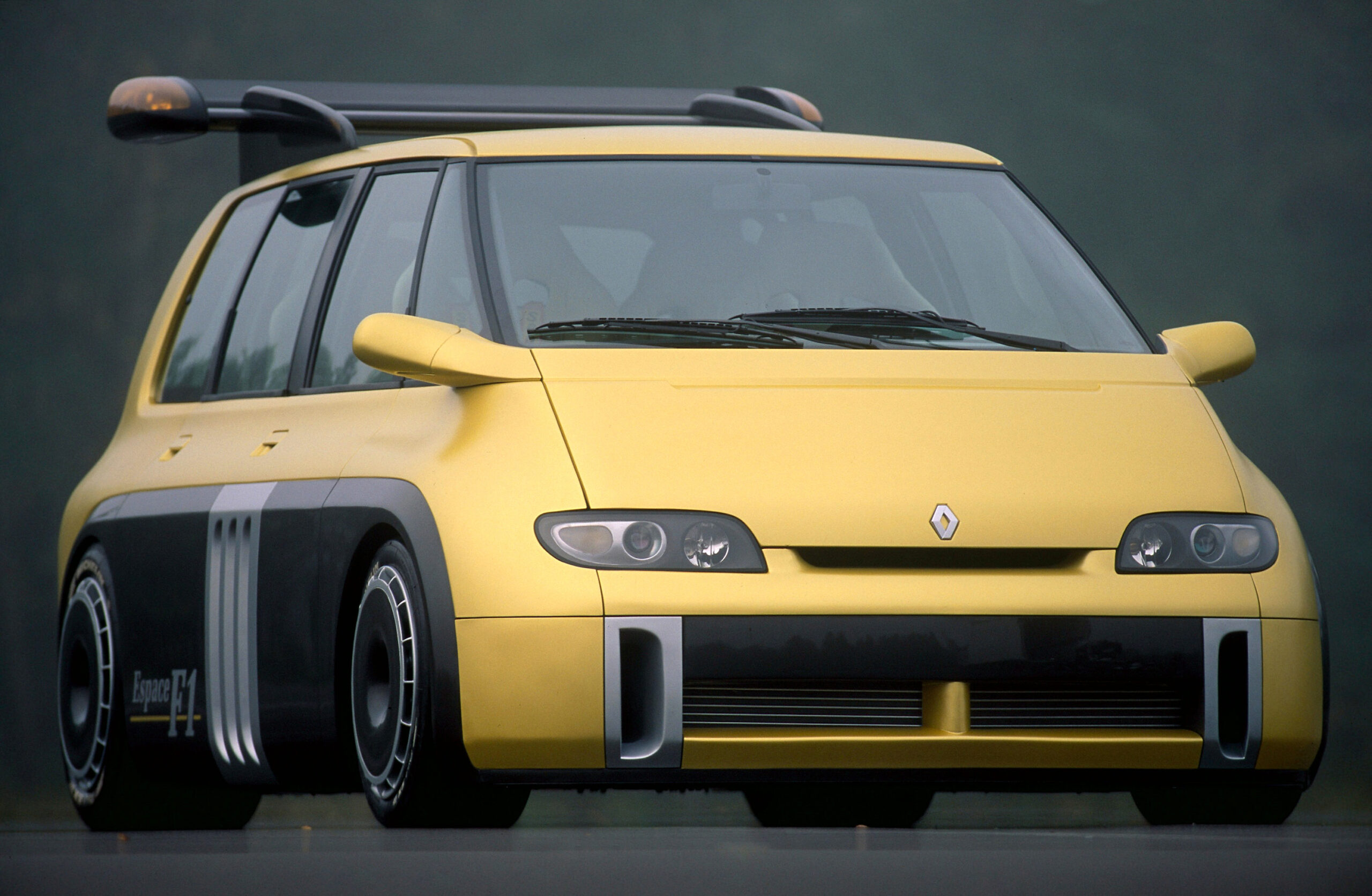
The Clio V6 was conceived as a halo model to enhance the image of the second generation Clio launched in 1998. It had to succeed the open-topped Sport Spider in a new international one-make series, while plans also existed for a road-going variant. From today’s perspective, that last idea may seem extreme, but it is worth remembering that Renault had already built the Espace F1 concept in 1995, powered by the 800 PS 3.5-litre Renault RS5 V10 from the 1993 championship-winning Williams Renault FW15C Formula 1 car.
Renault launched the Clio V6 Trophy at the Spanish circuit of Jarama in 1999, the year the company celebrated its centenary. Although intended as a relatively affordable one-make series, the championship visited legendary tracks such as Monaco and the Nürburgring and even appeared as a support race for the 24 Hours of Le Mans that year. The cars were rudimentarily built, based on a Sport Spider chassis with the V6 engine from the Laguna and a body that only vaguely resembled the new Clio. Both the public and the motoring press were wildly enthusiastic about the spectacular racing as well as the potential of a road-going version of the compact track weapon.
Jaguar XJR-15
Renault’s internal motorsport division developed and built the Trophy car, but the project for the road-going Clio V6 was handed to Tom Walkinshaw Racing (TWR), a name closely associated with Jaguar’s 1988 Le Mans victory and the XJR-15 supercar that emerged from that programme. Based on the Clio V6 Trophy bodywork, several prototypes were built for internal evaluation, and because Renault had no production capacity available for such a niche project, TWR also handled manufacturing.
Production took place at TWR’s facility in Uddevalla, Sweden, where the company shared operations with Volvo and the production line of the first generation C70. The arrangement created a logistical nightmare, worsened by intense time pressure because Renault was eager to capitalise on the popularity of the V6 Trophy and wanted to bring the road car to market as quickly as possible. As a result, development of the so-called Phase I fell short in several key areas, most notably its handling. The car gained a reputation for being unforgiving at the limit, with oversteer arriving out of nowhere.
Phase II
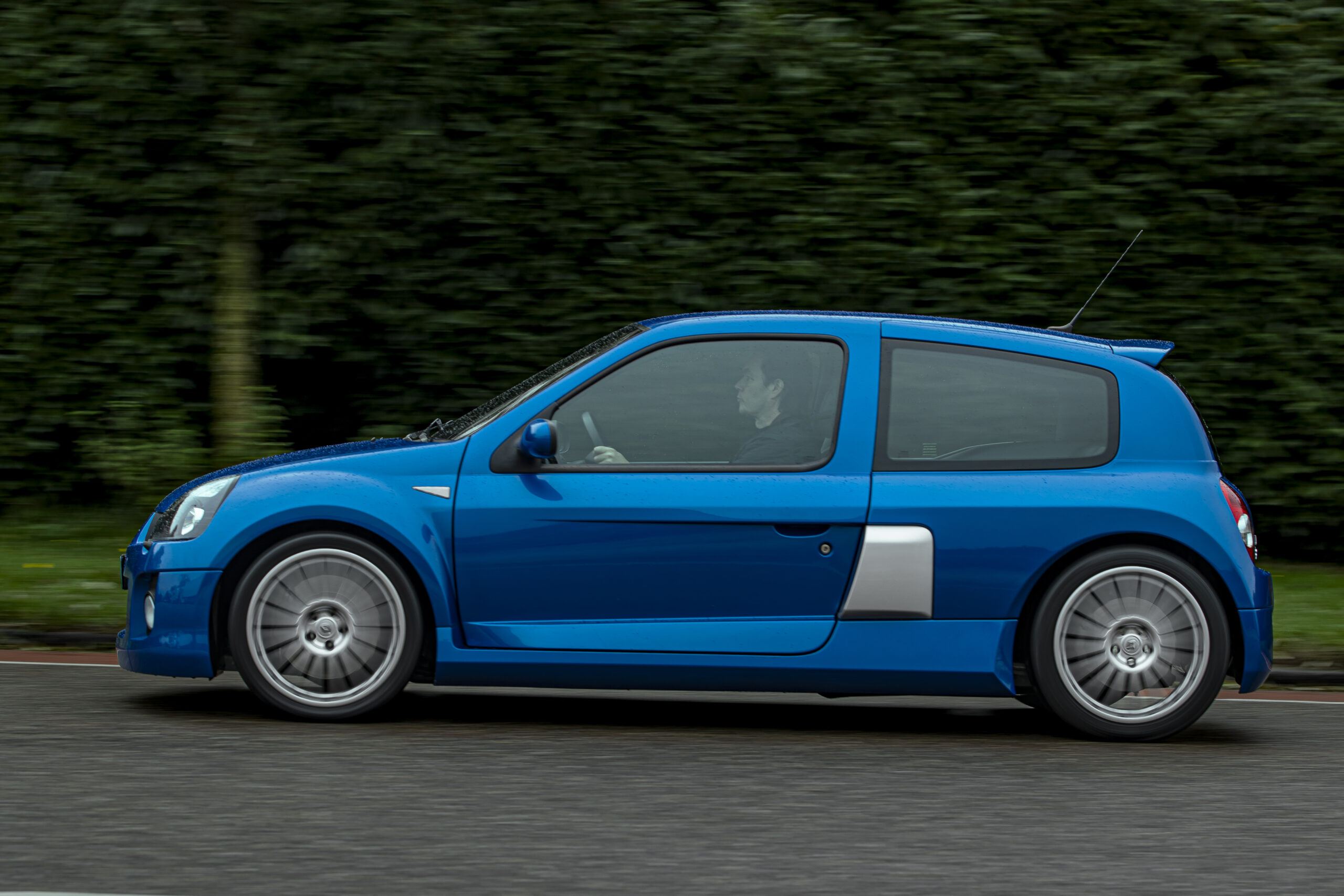
Consequently, Renault Sport and TWR began planning the Phase II almost immediately. The suspension pick-up points and rear subframe were redesigned to make the car less nervous and more predictable at the limit. However, TWR’s financial position was in decline and Renault ultimately assumed full responsibility for the final stages of development, while production was transferred to their former Alpine factory in Dieppe. Besides being the better version of the two Clio V6 iterations according to marque specialists, the Phase II is also rarer. Just 1,309 examples were built between 2003 and 2005, compared to 1,555 Phase I cars produced by TWR during 2001 and 2002.
New Beetle Cup
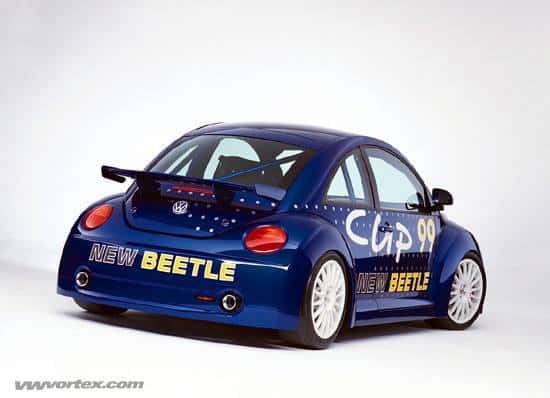
As mentioned earlier, the New Beetle RSi took a fundamentally different approach from the Clio V6, although the two shared more than a few similarities. Firstly, Volkswagen reached the same conclusion as Renault: that a dedicated racing series and a more sporting road variant would generate publicity and, ultimately, boost the image as well as sales of the new model. The New Beetle had already been unveiled at the 1998 Detroit Motor Show and sales, particularly in the United States, were progressing strongly. Volkswagen, however, was keen to sharpen the car’s somewhat girlish image, leading to the creation of the New Beetle Cup for the 1999 season. The success of the New Beetle Cup was short-lived, because the 2000 season was the final chapter, whereas the Clio V6 Trophy lasted from 1999 to 2003.
Volkswagen Motorsport developed and built between 64 and 76 race cars, depending on who you ask, based on the standard production bodyshell. In addition to the mandatory safety modifications, the cars received wider bodywork and a much more potent engine in the form of a 2.8-litre VR6 producing 204 PS and 270 Nm of torque. Power was sent to the front wheels through a six-speed manual gearbox.
VR6
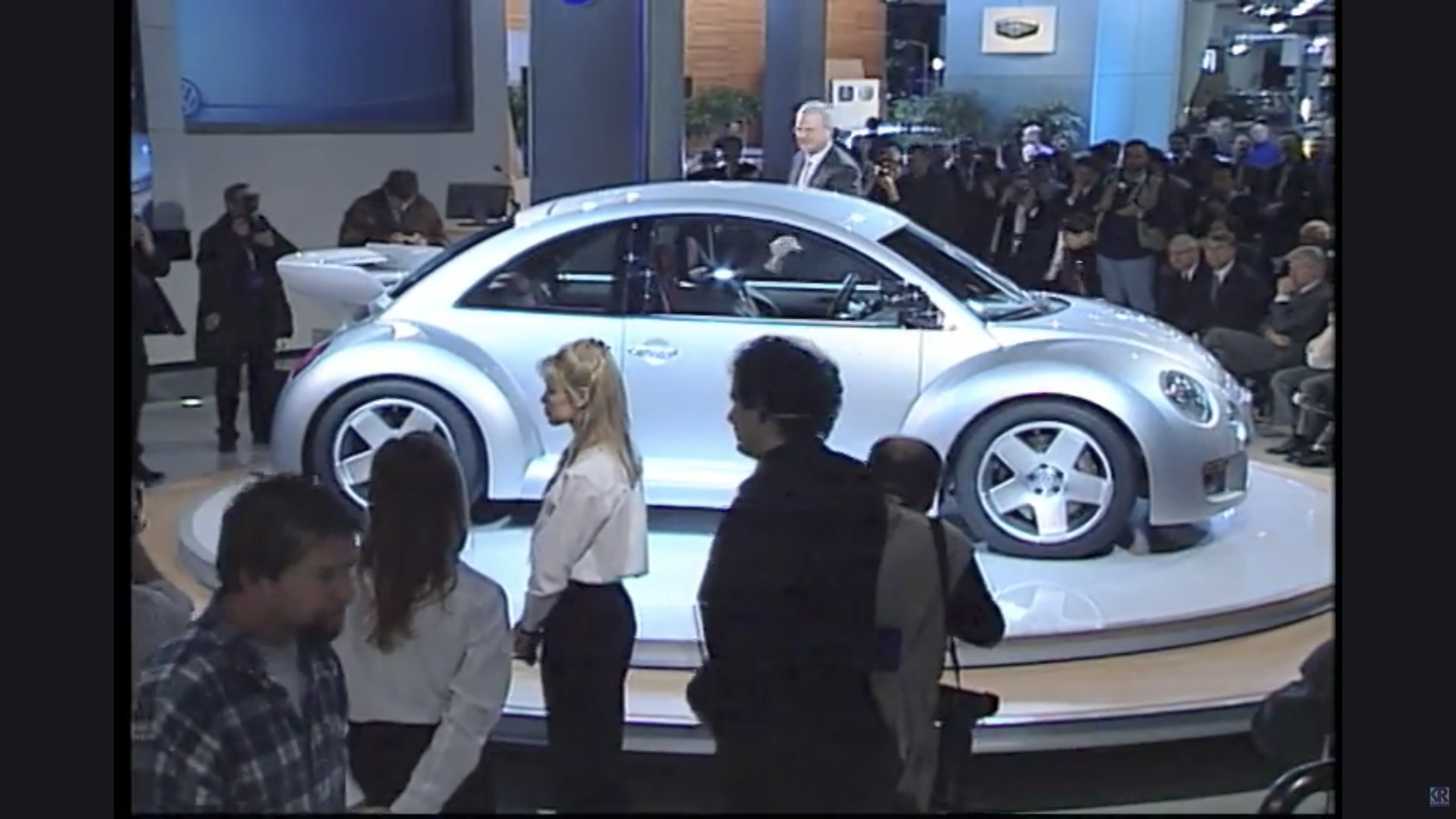
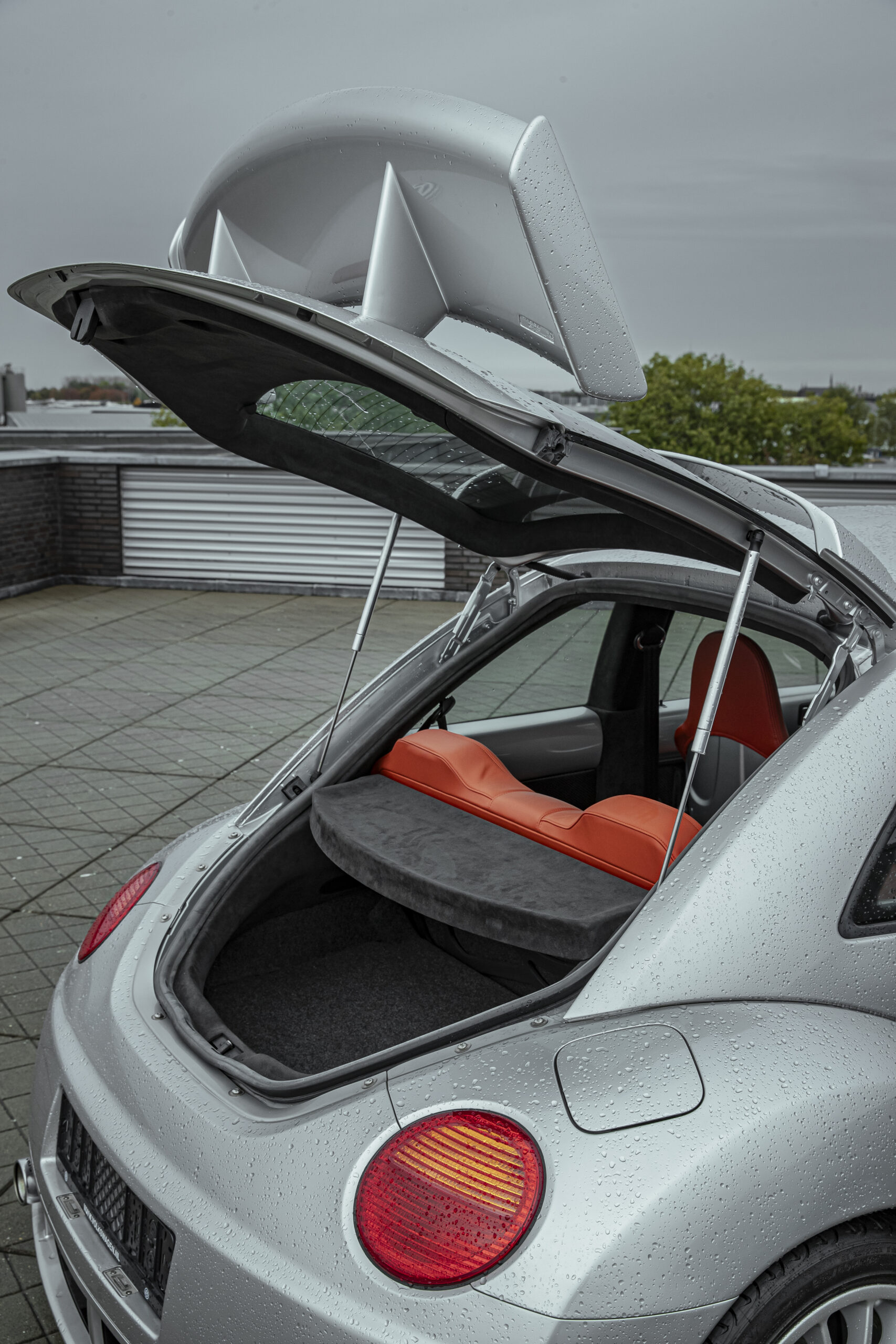
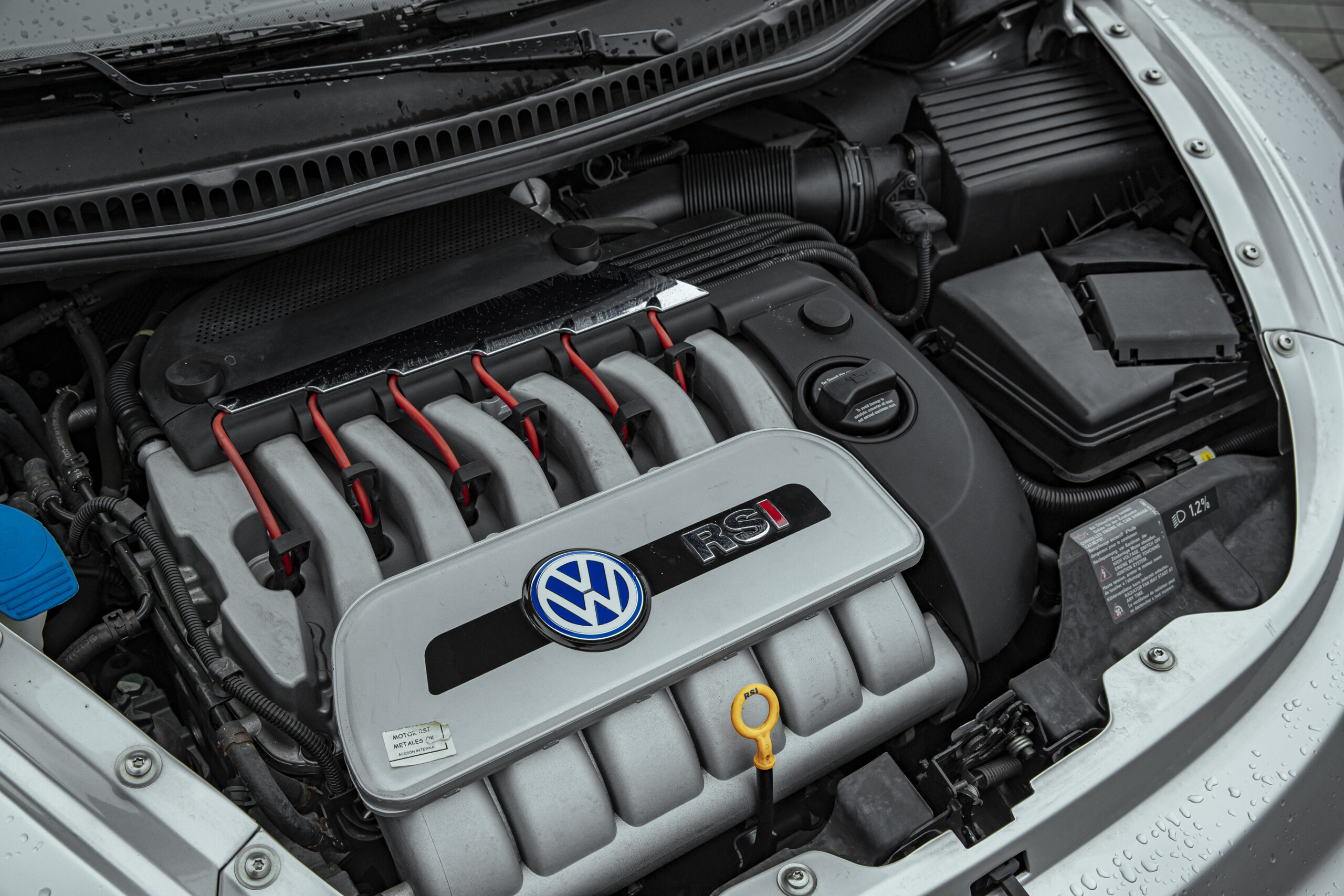
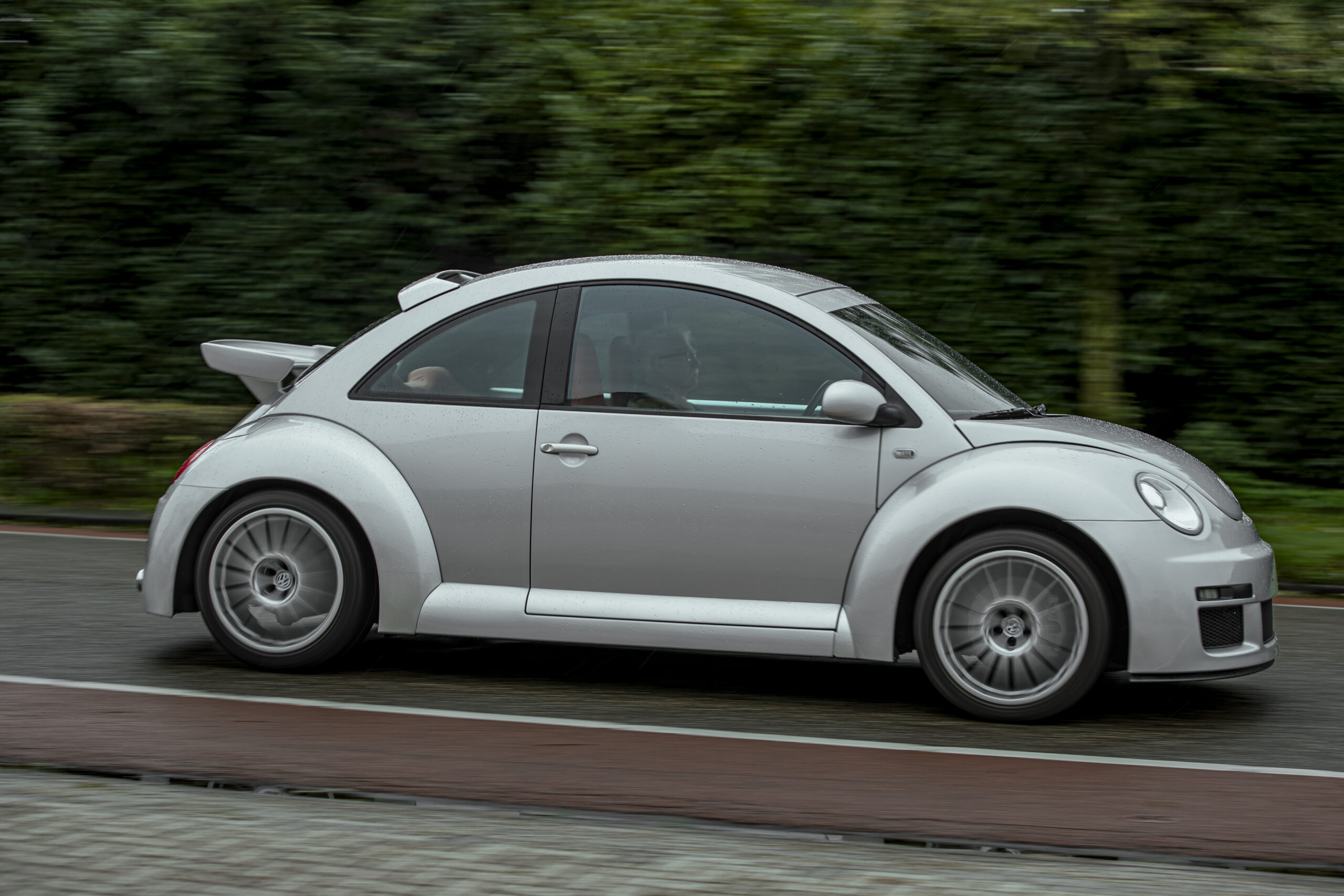
As a nod to the Cup racers, Volkswagen unveiled the New Beetle RSi Concept at the 1999 North American International Auto Show. Both visually and mechanically, the RSi closely mirrored the Cup Beetle, although its VR6 engine had grown to 3.2-litres and distributed 224 PS and 320 Nm (236 lb-ft) of torque to all four corners, rather than just the front. Not long afterwards, Volkswagen approved a limited production run of 250 examples, with customer deliveries beginning in 2001.
The VR6 engine itself was a perfect illustration of Volkswagen’s modular engineering philosophy at the time. By positioning two banks of three cylinders at an angle of just fifteen degrees, Volkswagen created an engine that was technically a V6, yet compact enough to use a single cylinder head. In effect, it combined characteristics of both a V engine and an inline engine, hence the name VR6, where R stand for “reihe” which is German for inline.
Bugatti
Confidence within the Volkswagen Group was at an all time high before the turn of the millennium. Ambitious engineering projects followed in rapid succession, including the Volkswagen Syncro Concept powered by a W12 engine, the Bentley Hunaudières equipped with a W16 and no fewer than three Bugatti concept cars powered by W18 engines. These were all examples of Volkswagen’s modular VR architecture, which allowed engineers to mix and match engine components in increasingly imaginative ways.
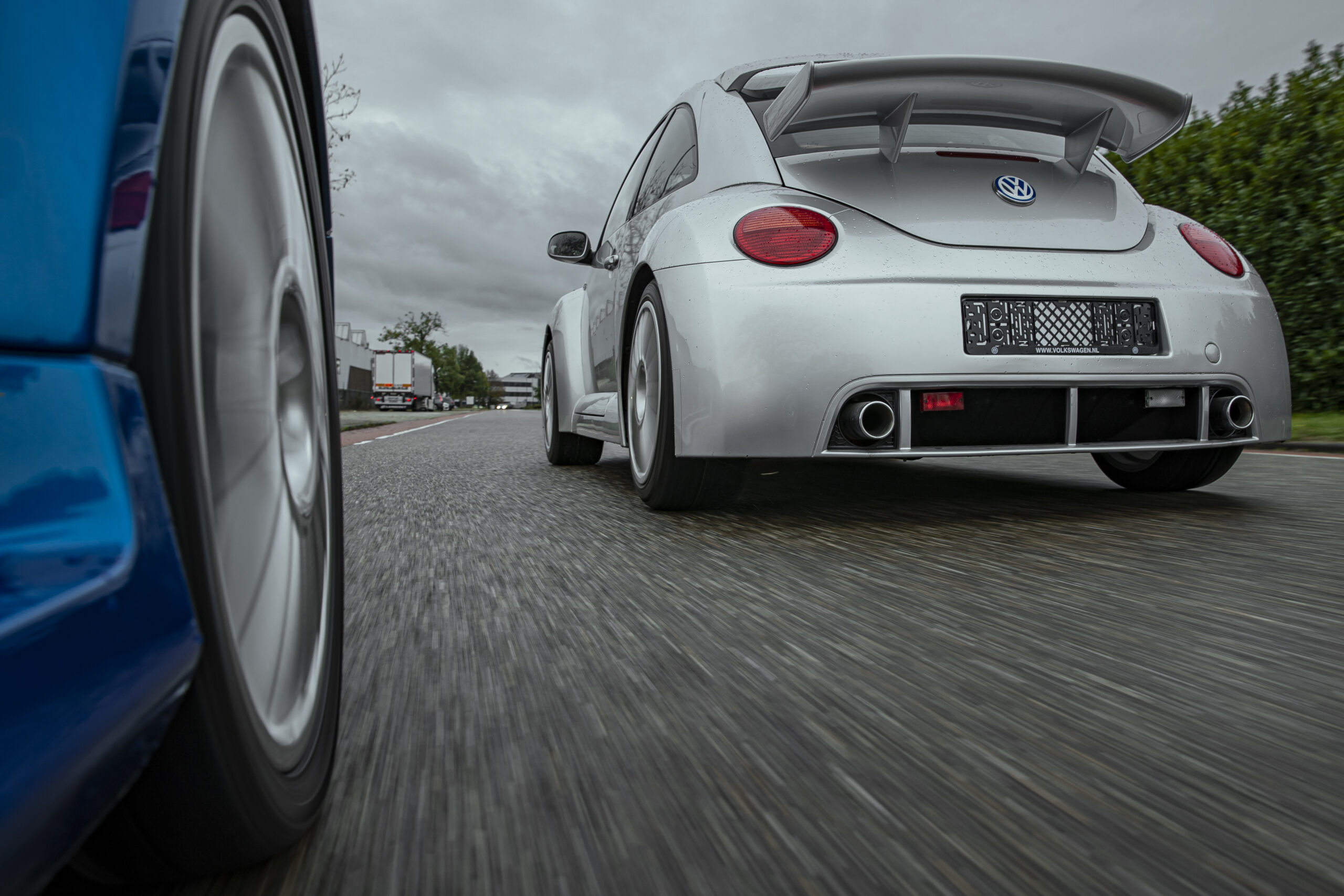
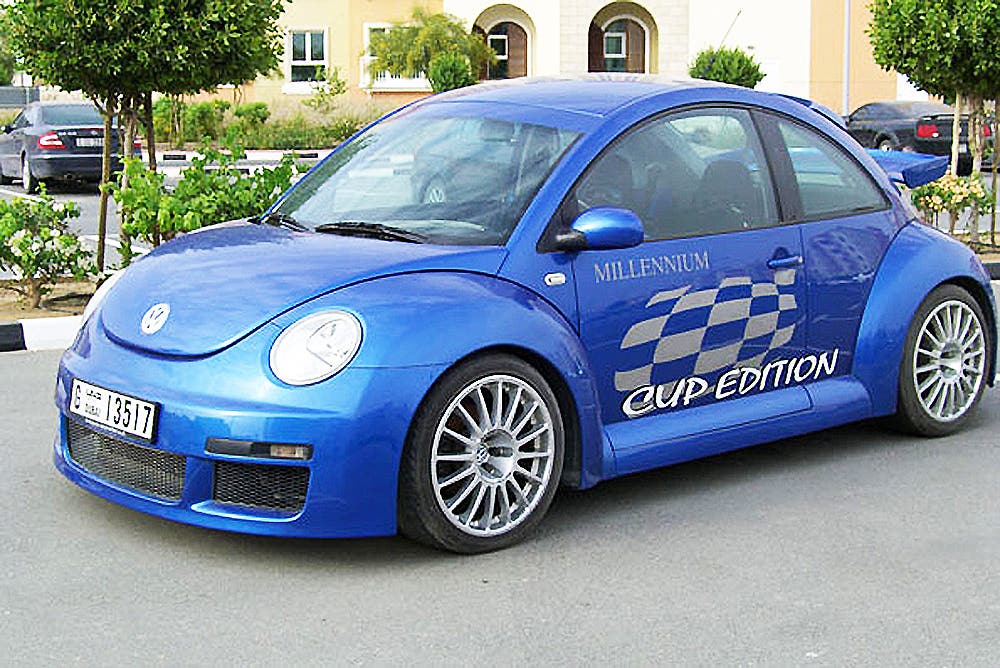
Before the arrival of the RSi, Volkswagen had already introduced the little-known Millennium Cup Edition in 2000. Also referred to as the Dubai Beetle, this mysterious road-going derivative of the Cup Beetle was built exclusively for Abu Dhabi and Dubai at Volkswagen’s Puebla plant in Mexico, with production limited to just eighty examples. Available only in black, blue or silver and distinguished by prominent graphics, it shared its appearance with both the Cup Beetle and the later RSi. The easiest way to identify a Millennium Cup Edition is at the rear. Where the RSi features a second exhaust outlet on the right side, the Millennium Cup Edition has a reversing lamp in this position. A single exhaust was enough for the Millennium Cup Edition, because instead of the RSi’s six-cylinder, it was powered by a turbocharged 1.8-litre four-cylinder producing 185 PS, driving the front wheels through a five-speed manual gearbox.
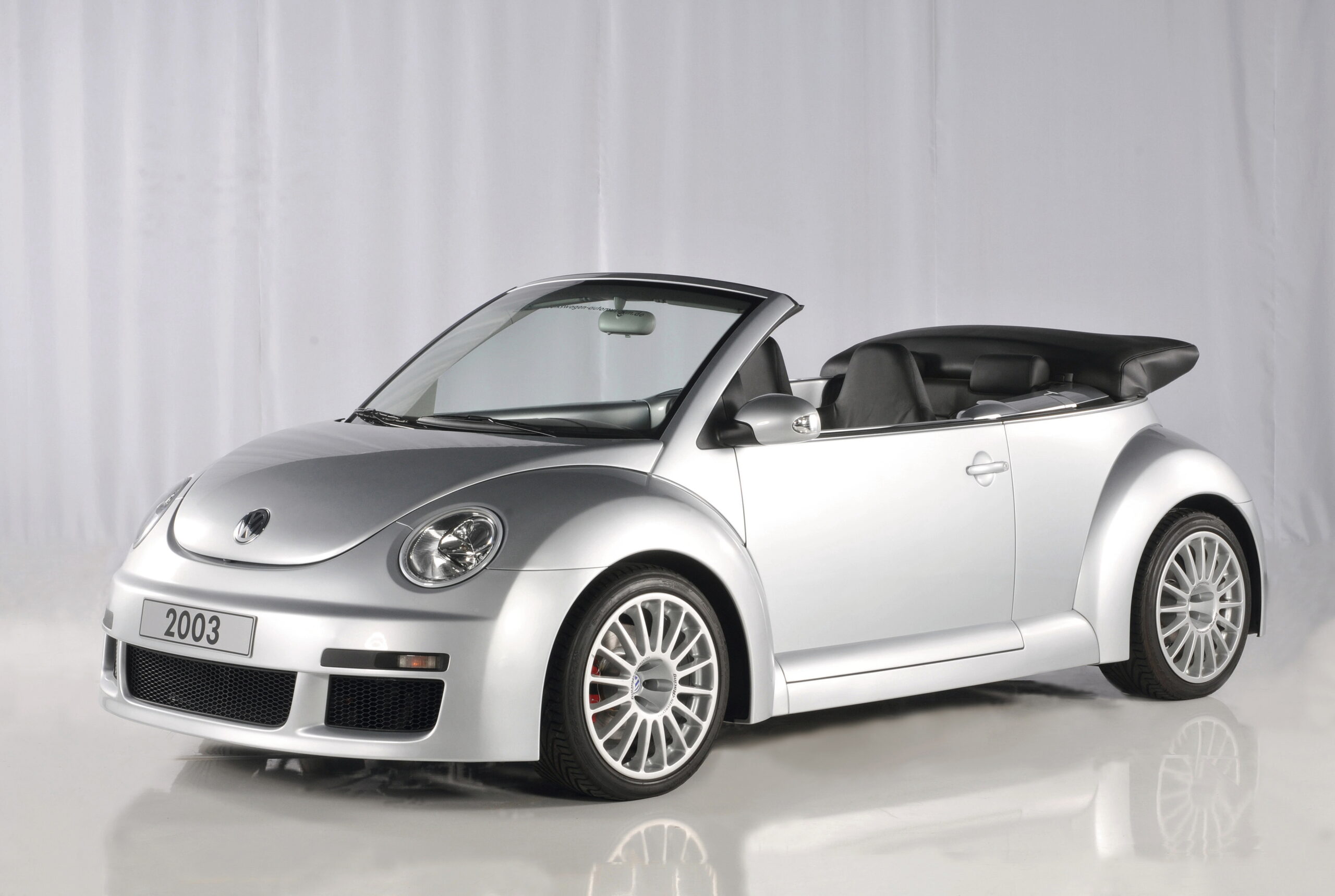
Volkswagen also built a single New Beetle RSi Cabriolet, although little information exists beyond a handful of photographs. Together, these projects perfectly illustrate the atmosphere within the Volkswagen Group during the Ferdinand Piëch era, when it often seemed as though no engineering ambition was considered too extravagant and there was always cash lying around in some desk drawer for yet another concept car.
Snappy
Those differences in concept and execution are just as apparent from behind the wheel. Where the Clio V6 can sometimes feel like an excited dog pulling on its leash, the RSi is more self-assured and less playful, despite its almost clownish appearance. That is largely a consequence of the way Volkswagen developed the New Beetle, as the engineers basically draped a Beetle dress over a Golf. Beneath the retro bodywork lies the PQ34 platform shared with the fourth generation Golf, hardly a recipe for truly spectacular handling.
At 1,530 kg (3,373 lb), the Beetle RSi is considerably heavier than the Clio V6, which tips the scales at a comparatively modest 1,335 kg (2,943 lb). By early 2000s standards however, the French car could hardly be considered a lightweight, because a Clio 2.0 16V, which gets remarkably close to the V6 in terms of performance, weighs just 1,010 kg (2,227 lb). Carrying significantly less weight and without a large lump of metal behind the seats, the 16V feels nimbler and inspires considerably more confidence at the limit, where it remains predictable and easy to place, without a snappy back end.
Accelerating hard in the Clio remains impressive even by modern standards, although the sensation is more of a sustained shove in the back than a violent kick. The soundtrack is superb. At low revs the V6 produces a deep, muted growl that gradually becomes louder, sharper and more urgent as the needle sweeps past 7,000 rpm. Gear changes are relatively precise, although the Clio would benefit from a tighter shift action and shorter throws. Something the Volkswagen engineers made sure to incorporate in the RSi.
During day-to-day driving, the RSi’s extra mass is hardly a handicap or even noticeable because its character is less focused than that of the Clio. The suspension is firmer than that of a standard New Beetle, but it was never intended for white-knuckle driving on twisty back roads. To a certain extend that is disappointing, because the RSi’s bold appearance seems to make promises that its engineering cannot entirely fulfil. As with many German performance cars though, the emphasis is more on fast cruising on wide empty country roads and the Autobahn.
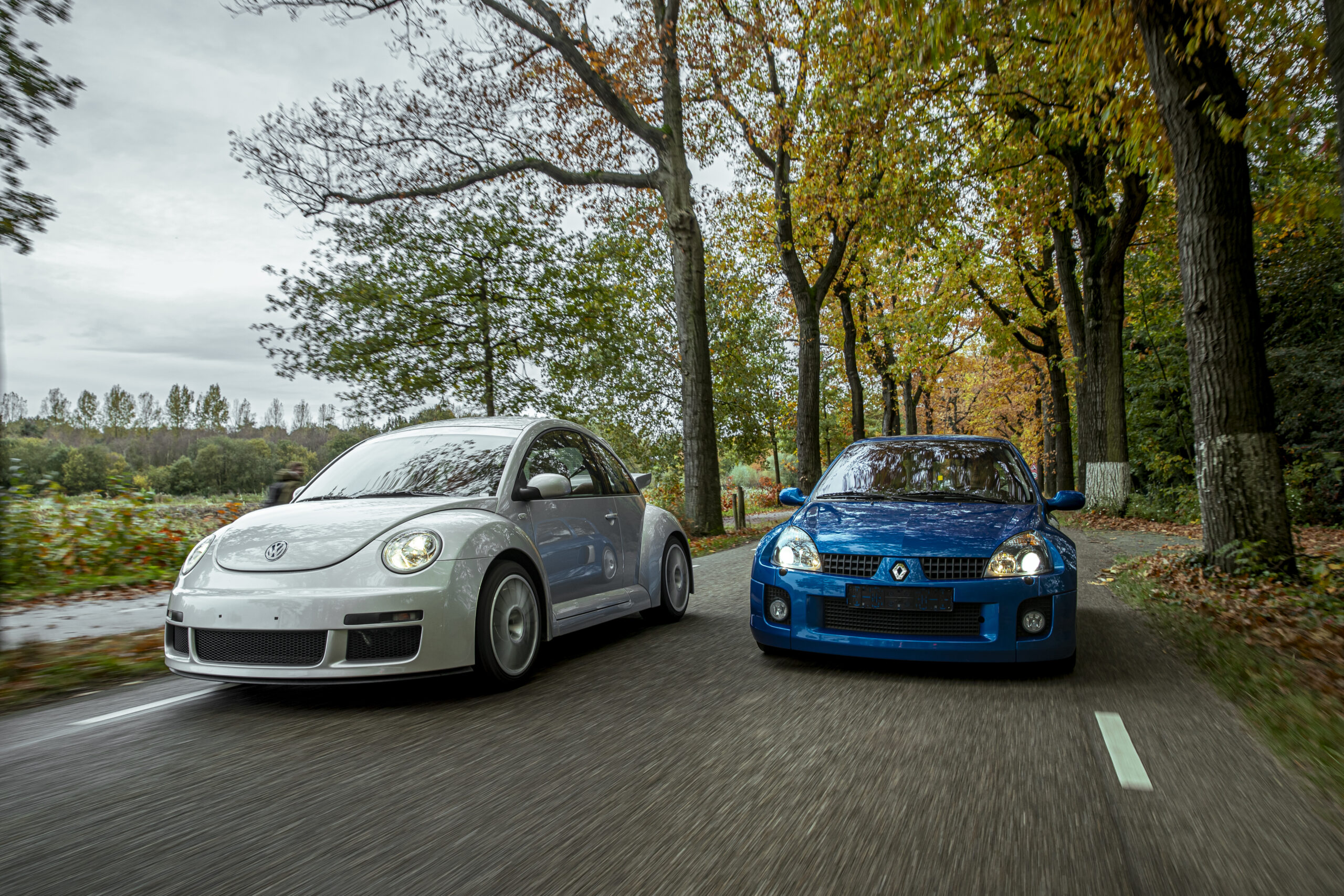
With its wheels pushed to the extreme corners, the Clio offers surprisingly strong grip. As long as the throttle is treated with respect, there is little to fear. The V6’s response is relatively lazy, so sudden bursts of power don’t have to be an issue. Lift-off oversteer is another matter entirely. Transfer too much weight to the front axle by coming off the throttle mid corner and the rear can snap away, requiring an immediate correction through the slightly slow steering to prevent the car from spinning off the road. This is where another characteristic of the Clio V6 rears its ugly head: the very tight steering lock. Even when it seems you can still catch a slide, the steering wheel simply runs out of travel, leaving you a first-row spectator to a high-speed ballet of your own making.
In the RSi, Volkswagen’s 4Motion four-wheel drive system allows all 224 PS to be deployed virtually at will, as traction is almost always abundant. Only excessive corner entry speed will upset the balance, and when it does the result is predictable understeer. Safe, certainly, but not especially exciting. The Beetle’s appeal lies in the way it grips on corner exit and then surges towards the next bend, reinforcing its natural preference for slow in, fast out cornering.
Disdain
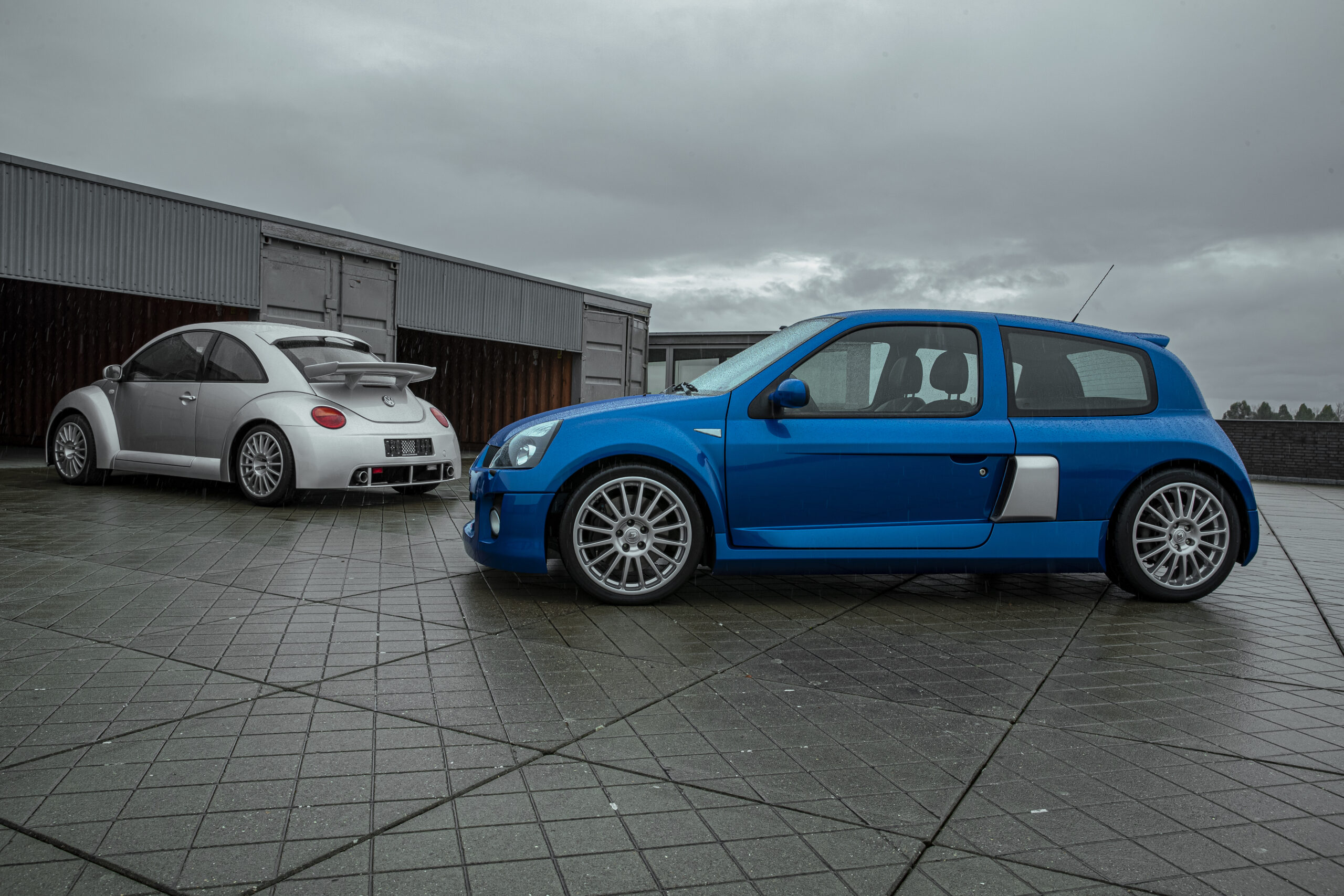
Nowhere are the contrasts more obvious than in the styling. The Beetle’s silhouette is slightly awkward, with its heavily curved roofline echoed in miniature by the front and rear wheelarches. The Clio, by contrast, looks every bit the racing car from which it evolved and is impossible to mistake for anything else. Patrick Le Quément’s design team successfully translated both the potential and rebellious attitude of the Trophy car into the road model. As a result, the Clio V6 attracts attention wherever it goes, carrying itself with typical French confidence, or perhaps a faint air of disdain. Looking at it from the side though, there is no denying that the rear wheels are pulled so far back, that it almost looks comical.
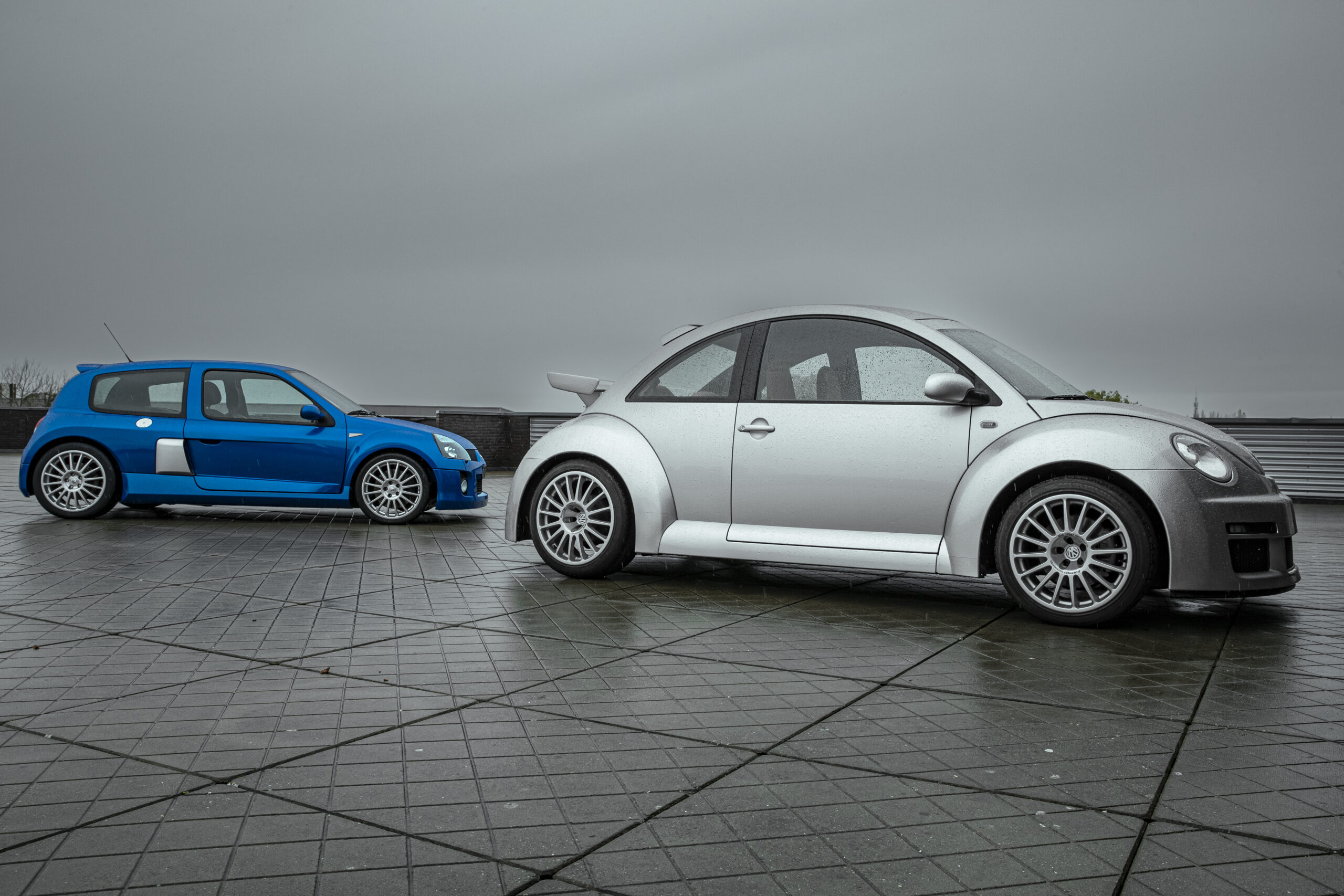
The wheels provide another example of how closely matched these cars can appear at first glance, as both ride on 18-inch, 16-spoke alloys. The RSi wears 245/40 R18 tyres all round, while the Renault reserves the same rubber for the rear axle and makes do with narrower 205/40 R18 tyres at the front.
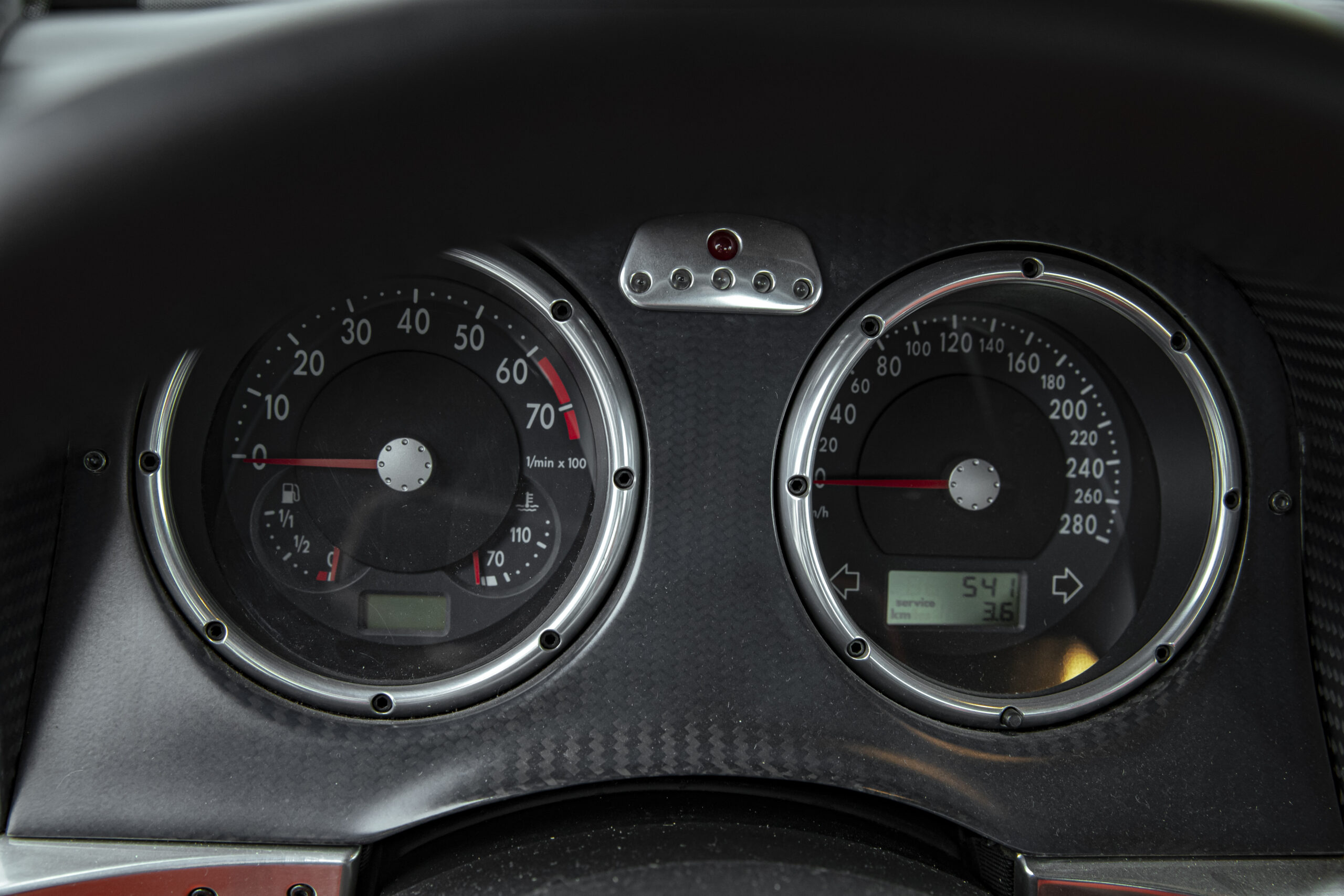
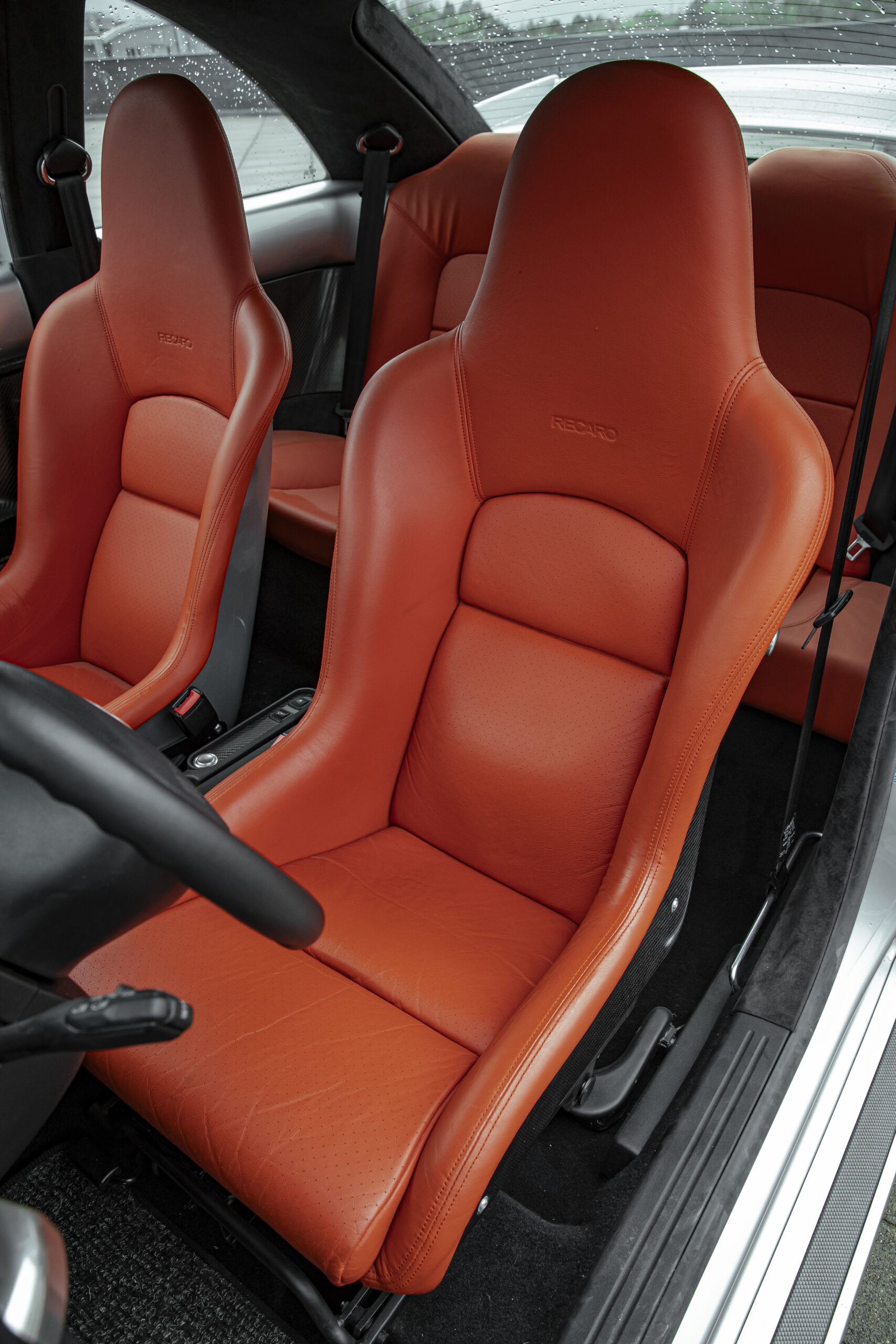
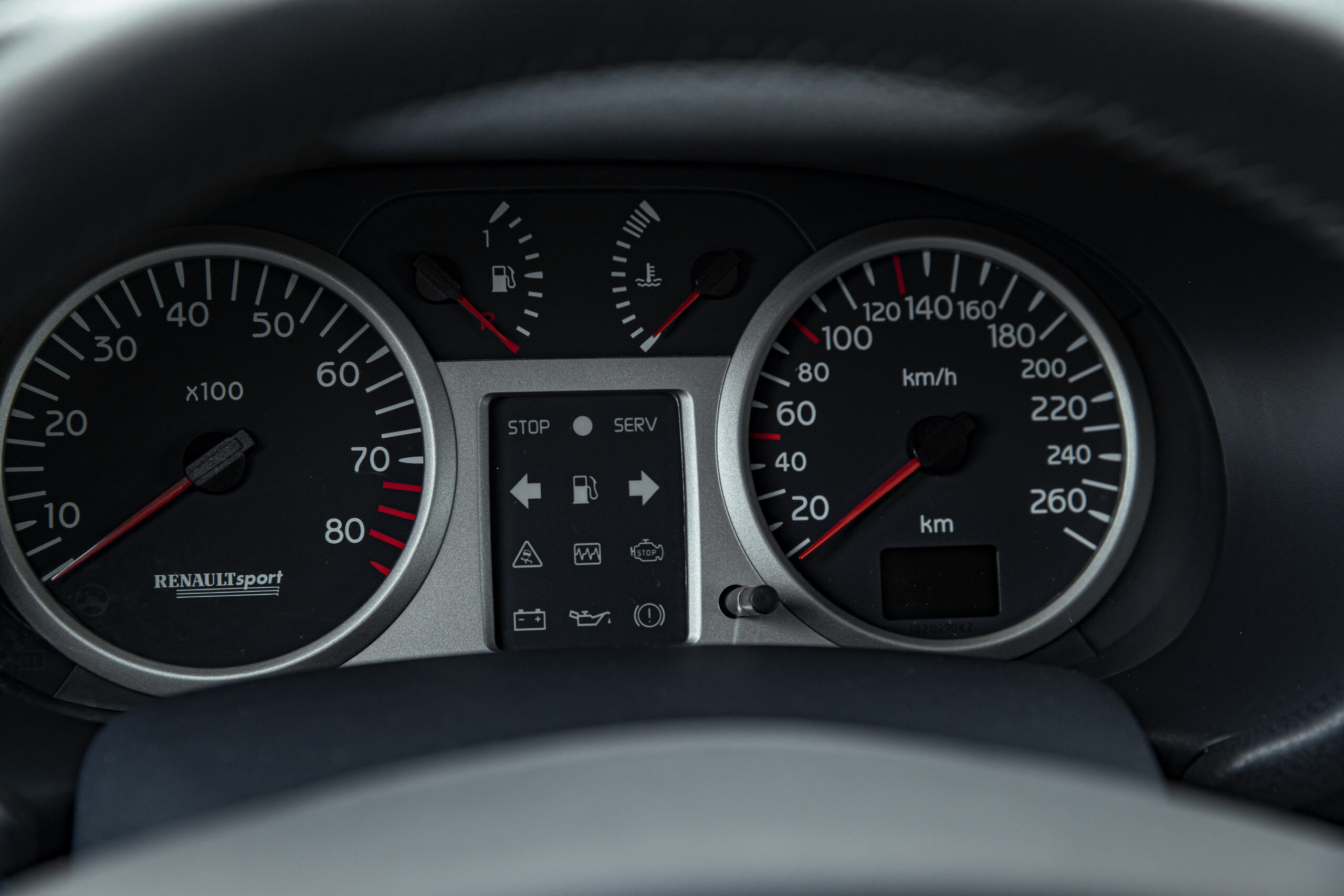
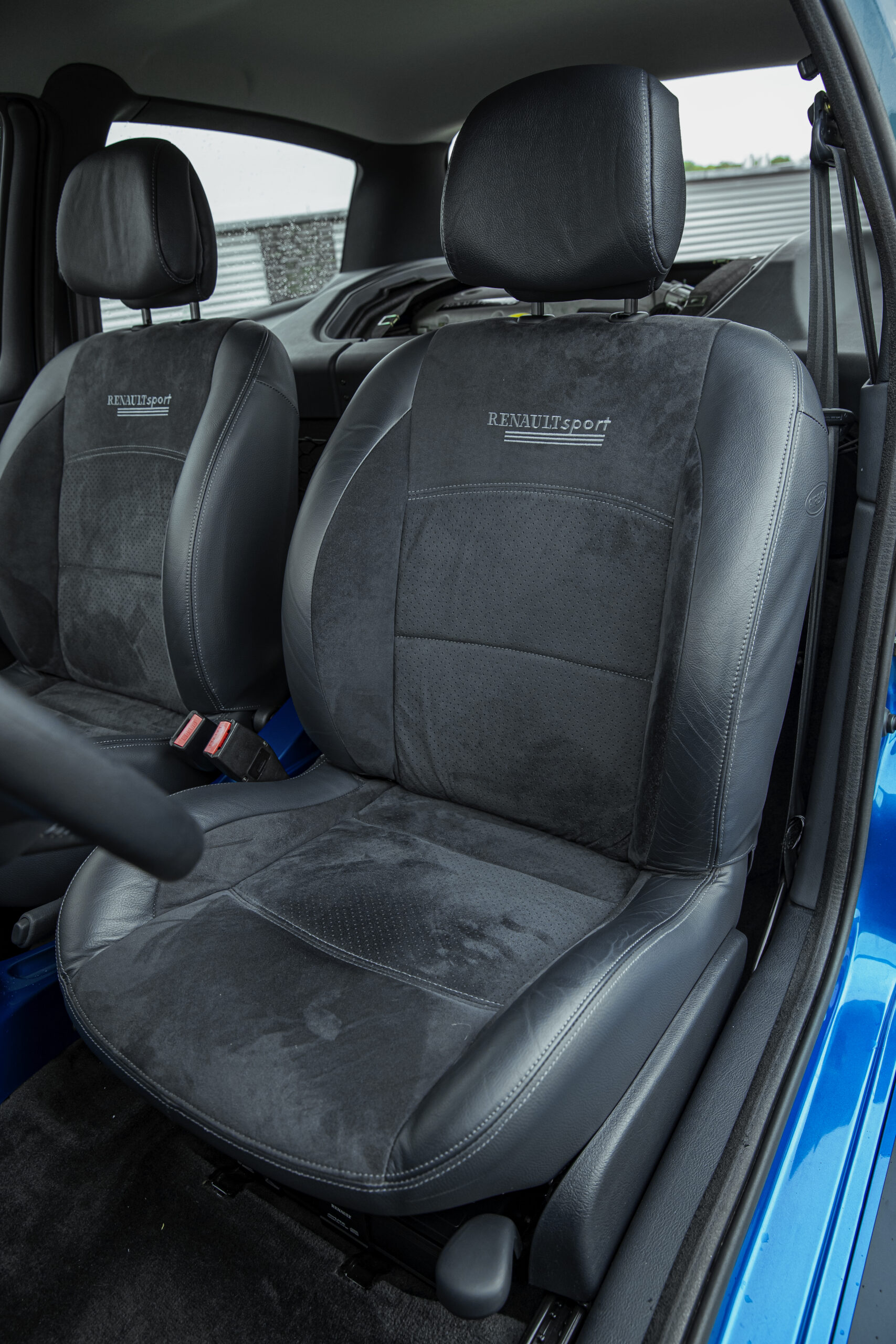
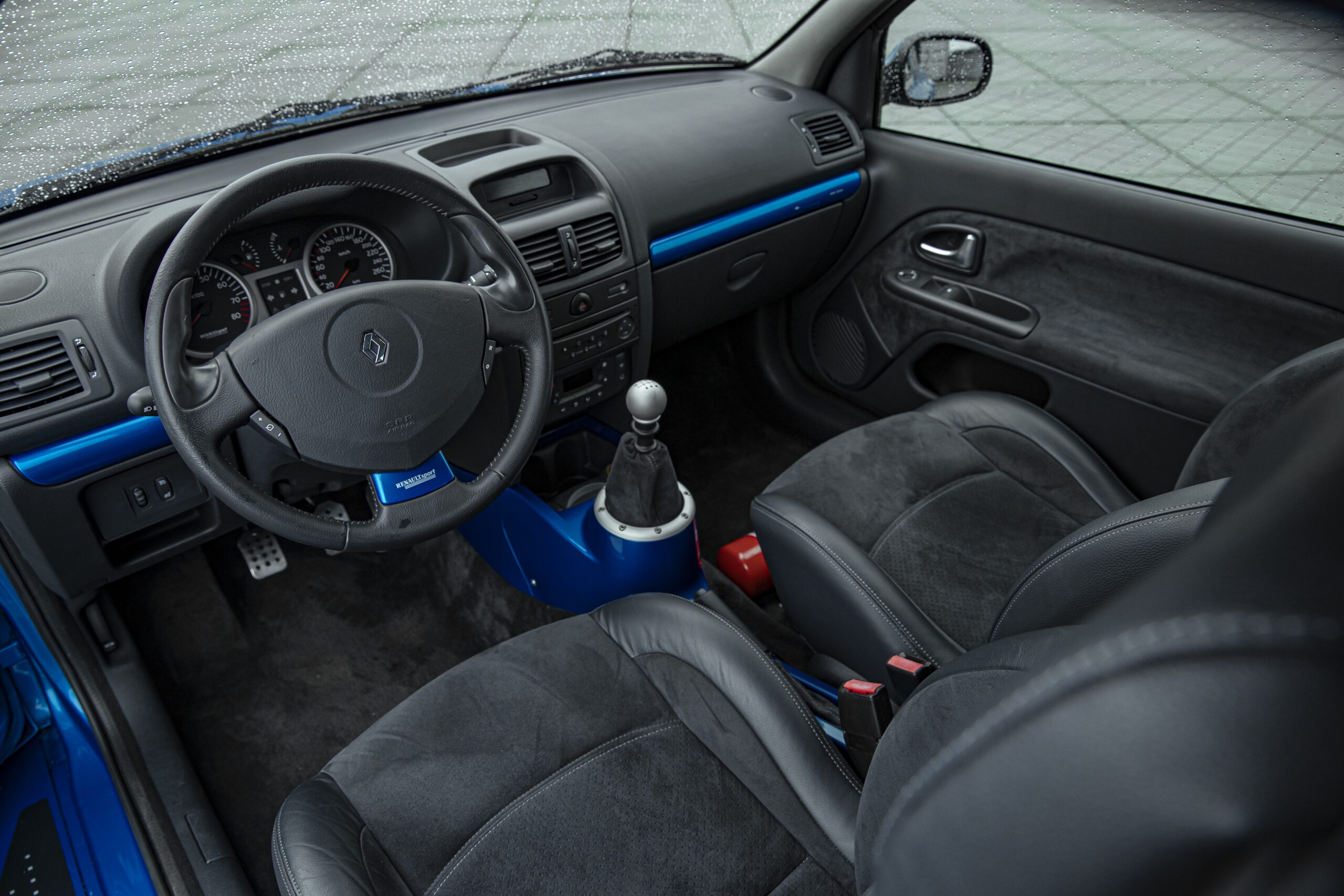
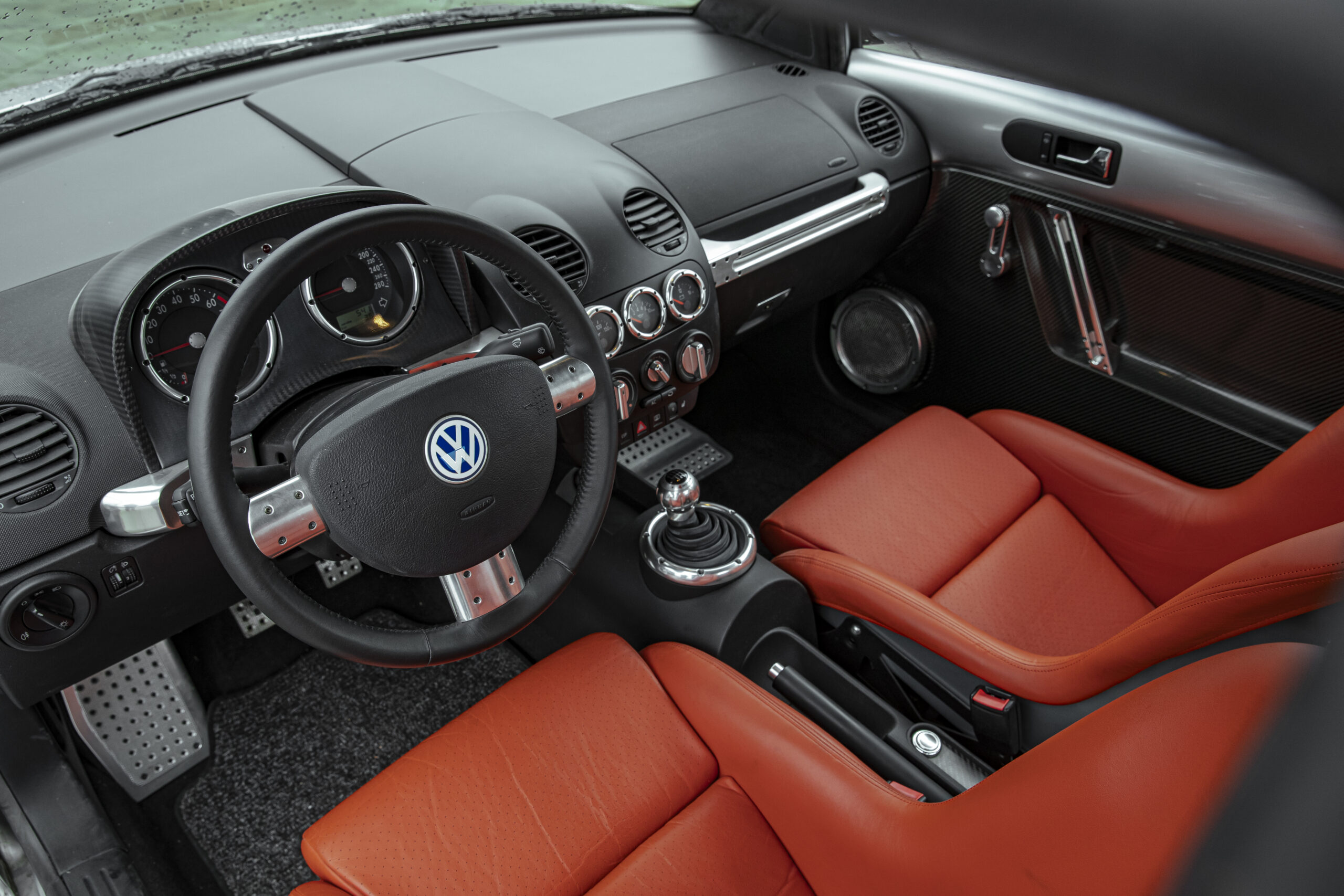
Inside, however, the Renault is a bit of a disappointment. The cabin is dominated by hard plastics and there is little to distinguish it from lesser Clios that cost not even half as much. Where the Renault feels like a hastily assembled race car, the Volkswagen has the appearance of a concept car, but with the typical build quality the brand is known for. Its interior is more akin to that of an Audi TT, with beautifully executed aluminium detailing, carbon fibre trim, supportive bucket seats and an Alcantara headliner which also houses the radio just above the rear-view mirror. It constantly reminds the occupants they are travelling in something very special, something the Clio V6 unfortunately fails to do.
Scared shitless
After driving Renault’s most outrageous street car and Volkswagen’s angriest Bug, especially in the year when both are celebrating their silver anniversary, the depressing conclusion is that time has not done the automotive industry any favours. The motor car has reached a point where models, segments, and even brands have morphed into a tasteless soup, leaving character, purpose, and identity increasingly indistinguishable. We live in an era where the crossover is king and electrification is the new form of colonisation.
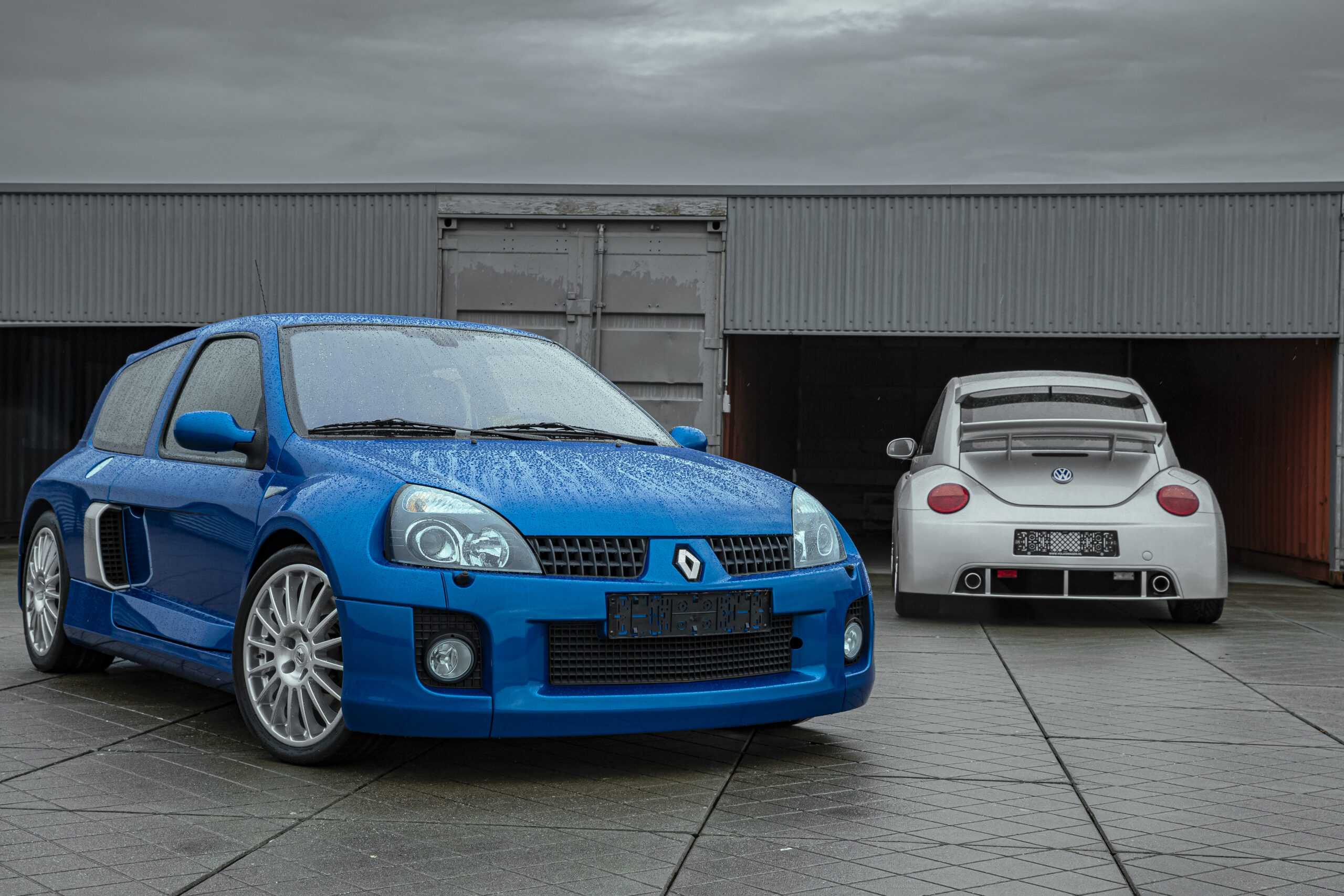
When everybody worried that society as we knew it would crash to a halt because of a very different bug, small teams of engineers cooked up some of the most extreme hot hatches the world has ever seen.
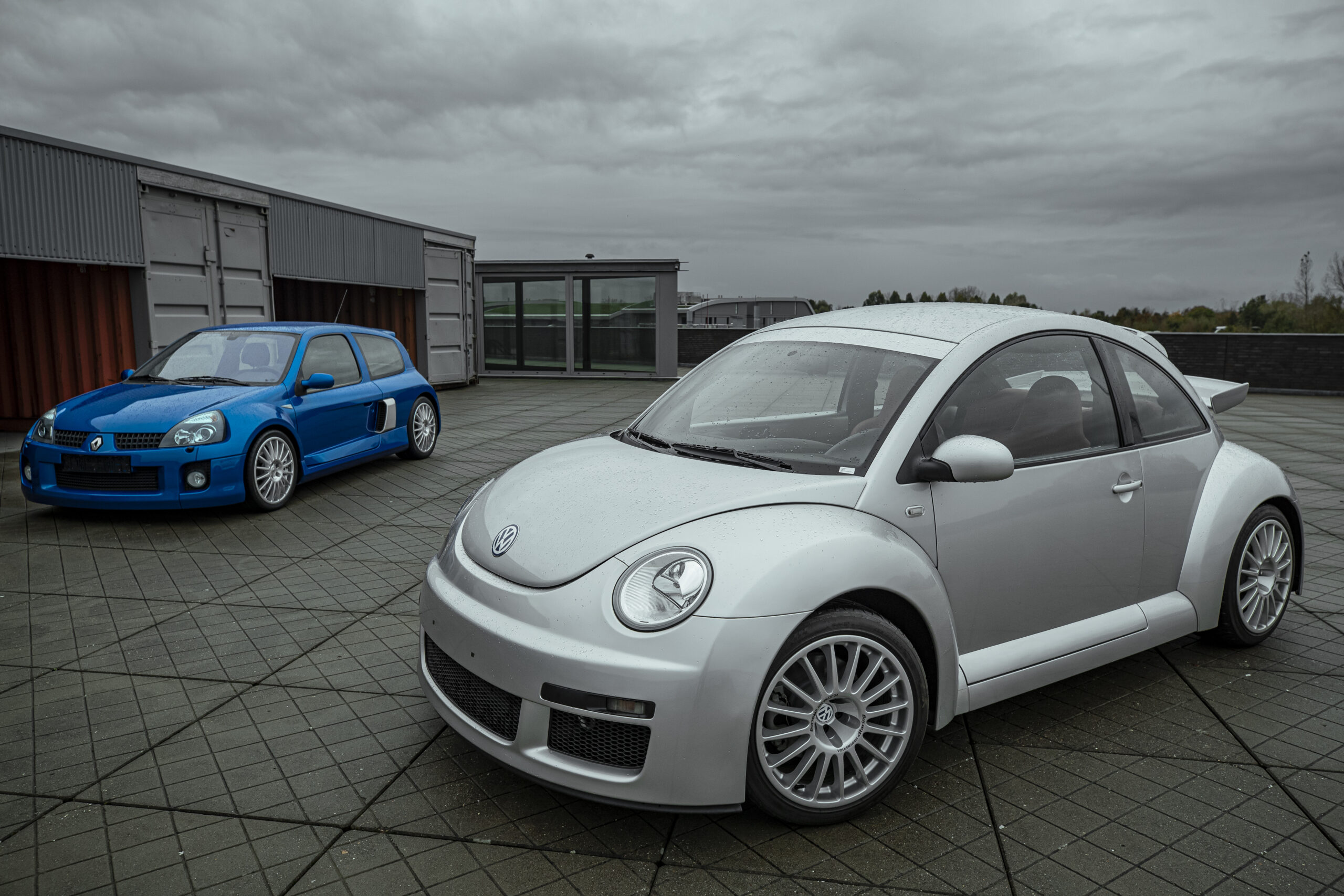
So, without running the risk of ending this story on a depressive note, let’s revel in the glory that we have cars like the Clio V6 and Beetle RSi, albeit in very small quantities, and that we can enjoy the VR6 roar and the safe road holding of the unique Volkswagen, or scare ourselves shitless with the Renault’s twitchy handling while listening to the V6 in the back.
Support Motorcar Journal
Donate a tank of fuel